Posted on Leave a comment

BUYING VALUABLE ABSTRACT ART

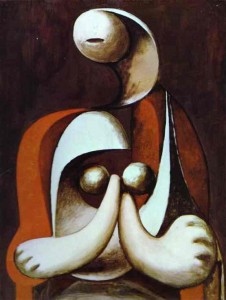
There are three reasons in buying art.  The first is of course buying a piece of art because of its inherent beauty and that it appeals to you personally.  It strikes a deep inner chord for you, so much that you want to put it on a prominent wall.  It becomes like a reminder for you of beauty, of a deeper spiritual world.  The painting gives you visual pleasure.picasso-nude-in-armchair
The second reason is that you discover an emerging artist.  You find an artist who is painting with authenticity and there seems to be an inherent power in the work.  As a buyer of art you are looking for something you like but also for investment, banking on the piece increasing in value as the artist becomes more notable.  You buy low with the anticipation of the value increasing.  Meanwhile you enjoy the work of art in your home.  The art history books are full of intriguing stories of artists selling to a buyer interested in the art piece itself but also for its potential and future value.  Often, a very good relationship is established between the artist and the art buyer – a symbiotic relationship.

Buying valuable abstract art however is unfortunately attained only by the wealthy.  Too often they are purchasing just for the supposed market value.  The artist is already famous, the price is high not only because of its inherent value to the world of abstract art but because it somehow has risen to the top, demanding top dollar.  Where does the value  come from?  From the piece itself, the raw impression or from how society has transformed it into something monetarily valuable?

Buying valuable abstract art for primarily monetary reasons is a concept I have yet to understand.  Some critics and investors contend that buying art from well established artists is the best monetary investment possible.   I often ask myself if this breeds only more banal abstract art, pointless and unauthentic expression?   How often have the art critics and the auction houses literally fooled the public by selling inarticulate paintings that lack force and poignancy for hugely inflated prices?  Then when they are sold, we strain to see the value in them – the visual force they are supposed to represent.  We are told they are ‘landmark works’ but even the common man can see when in fact the King has no clothes on.
Posted on Leave a comment

PAINTING LINES AND CIRCLES

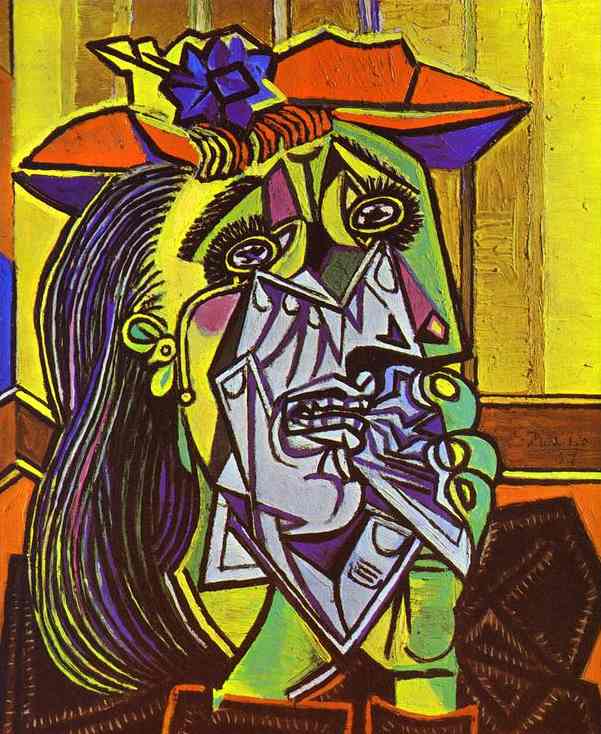
Abstract painting is not just masses and large painted fields of hue.  Painting lines and circles will often be required.  I never took any lessons on this but self-taught myself and so, along the way, discovered a few helpful tricks.  picasso-weeping-woman

I am so impressed with how Kandinsky could create those perfect circles and sharp, crisp lines that gave his paintings such clarity and force.  In the beginning my own attempts were poor copies.  I kept practicing and so now, quite a few years later my lines, circles and tight shapes are much more professional and therefore, visually effective.  The example is obviously by Picasso who also used a variety of outlines in his work.

When I have the hue I want I mix it of course with thinners.  Every artist has their own formula but I use about 1/2 turpentine with 1/2 Gamblin Neo Megilp..(odd name I know).  The trick is getting the right formula and this only comes with practice.  Some brushes just will not perform and so you will have to experiment with the right natural bristle brush that truly cuts a good line.  The ‘angle brights’ are good and even the synthetic by Princeton does a good job.  I have two of the #12 Catalysts.  For very fine lines use the brushes that car detailers use – the angled liners.   It will be necessary to pay more for good detail brushes, but it is so worth it.  Keep mixing the hue with the thinners until you have the right consistency.

Have an extra small canvas handy and work on this until you get just the right flow.  With practice you will be able to draw a long line and have the paint flow nicely.  The trick is to have a good opaque line that is diluted only enough to let you drag it in a long line.  If the line is thicker, concentrate on one painting just one side of the line and then go back and paint the opposing edge.  When you have two good, sharp opposing edges, then fill in the center.

For circles, it is difficult without a precise drawing.  I can now paint a circle without a line drawing on the canvas but having a drawing makes it easier.  I  pull one half of the circle and then re-position my hand to draw (paint) the other half.  Try to be careful to not let the paint build up too much along the line.  Sometimes I will take the excess and carefully put it in the center of the circle for later use.  You want a nice, clean edge without excessive build up.  When you have the perimeter of the circle defined, then go in and paint the center of the circle.  For both lines and circles you will probably have to support your hand by a finger resting on the canvas.  Or use the rounded wood pointer that rests against the canvas.  It is important to be steady and this comes also with practice.

Posted on Leave a comment

When is a Painting Completed


When is a painting completed is a critical question you will be left to answer on your own.   There is the story of John Singer Sargent and how he completed his paintings.    After a work was 99% complete he would take it into another room.  In that room without distractions and in different light he would study it from time to time, between other commissions.  Then when he finally saw what was needed he would retrieve his pallete and brush and with just a few accents meticulously placed, the painting was finished.DSC02672

The story might be just hyperbole but it gives some insight for the advanced artist as well as the beginner.  There is always the burst of energy and inspiration and this eventually dissipates as the painting wears on.  It is not always easy to maintain the initial thrust of the work.  The tried and tested rules for a completed painting do not easily apply to abstract paintings which is my genre.  We can say a few things however that will point distinctly towards a painting’s completion.

Firstly it certainly must meet your demands.  Are you pleased with it?  Did it in fact capture some or most of what you had intended?  If accidents occur and they often do in abstract painting, are you pleased with them?  If not, can they be corrected?  Very often in my own work I ask myself if more contrast is needed and are the highs, high enough and the deep tones, deep enough.  Can the contrast or tension be increased without sacrificing the overall look of the painting?  Is there movement or is the painting for some reason just static and if it is static and flat, how can this be corrected?  When is a painting completed will ultimately be answered by you alone.

Sometimes an abstract painting is done primarily through a spontaneous effort, even completed in a day.  Going back and adding to or subtracting needs to be done with extreme care and attention, otherwise any corrections will look out of place.  It is important to not ask yourself what someone else might like in the painting – please yourself only.  If in painting there is an area that is remarkably effective and you feel you have exceeded your abilities then this is excellent.  If the rest of the painting is not quite as inspired this is ok.  This is progress.  The fact that part of the painting represents something remarkable is a notable achievement.  Sometimes small attenuations on the rest of the painting can even augment and enhance those high parts of the painting.

Certainly set it aside when you are practically complete.  Bring it out in a week or two and maybe even bring it in and hang it on the dining room wall.  Study it.  What else could be done, if anything?  I like my paintings to have a certain drama or force or energy.  One painting that I did had very good composition, good balance, good movement but the colors key was too flat.  I re-worked the entire painting with more intense hues and the painting was transformed.

Posted on Leave a comment

STARTING AN ABSTRACT PAINTING

The most formidable obstacle  in starting an abstract painting is the feeling of  uncertainty.  Not knowing what really will develop, what will take shape and be manifested can be a true mental blockade.   It is this un-knowing that lies at the heart of abstract painting, more than say pictorial scenes depicting something apprehendable.  Here are several approaches that will help you overcome this.DSC02557

Eventually in my own work I came to realize  that it takes just a whiff of a feeling,  a corner of the mind that becomes enlivened to sketch out a concept.   In writing it is not that different.  A faint idea is there, a faint image of what someone might do in a situation and from that small beginning authors write  very elaborate pages.  This is an example of the sub-conscious assuming a higher demand.  A small  intuition develops into a much broader expression.  This is at the heart of true art which is transformative.   Do not wait for a grand theme or even a composition.  Perhaps no one discovered this more joyously than the landscape painter,  Turner.  His work became dynamically abstract.  Simple scenes gave way to elaborate and expressive landscapes.  It became for him a more full and  honest way to reinterpret his world (our world).  He was originally a remarkably skilled draftsman who drew magnificent buildings.  All of that elaborate planning and detail work eventually gave way to a much freeer abstract expression.   He lived long enough to have his work develop more into something that pre-dated  the so-called father of abstract art, Kandinsky some eighty years.

I find his later,  almost abstract landscape paintings to be inspiring.  But my  point is this, to allow for even small hints, small directions and purposes to get a painting started.  It is usually impossible to know what our mental and spiritual and emotional purposes are.  That would be akin to having one’s personal psychology fully understood before getting up in the morning.  We can never fully know our psychology but we can be aware of the immediate moment.  It is important to trust our feeling and to get started.  Watch a child and see how they just get started without the endless ponderings.   It is this awareness that can transform a small and not very well understood concept or image and bring it to canvas.  As I said before, the important thing is to paint and to paint often.  Don’t wait for some brilliant idea or grand theme.  If there is any brilliance it will most likely be in the way it was painted – that is,  all of the nuances of attentive brushwork.  Be very conscious of your brush work.

Even very well known abstract painters will admit to the ‘accidental process’.  From an often small sense or feeling or idea they will begin to work.  Remarkable things will develop in the way of impressions.  They often begin as accidents.  Sometimes they are left in exactly as they occur.  Sometimes an artist will decide to bend them or augment them or enhance them.  This will work in your favor…you could call it the fifth dimension.  There is this universal thread that seems to weave through art.  It is almost impossible to be aware of it consciously but our sub-conscious can allow it to manifest.  When you are painting try not to be distracted…but concentrate and be sensitive to what is developing.  This process is certainly valid and even essential.  Trust in it.  This kind of trust will help to alleviate the fear in getting started.  There will always be uncertainty.  As the painting develops this uncertainty will eventually give way to a deeper appreciation for what is being expressed.  Allow it to happen.  This is the wonderful dynamic in creative art.

Posted on Leave a comment

What is Abstract Art

What is abstract art is my second article on understanding abstraction.  I was listening to an interview last night of Gerhardt Richter.  Though the interviewer’s questions were remarkably insipid, his replies were insightful.  There was the distinction made between expression and impression in abstract art – two very distinct processes.  The artist is attempting to express something he or she feels internally.  With expression there  is volition required, a physical effort, planning and execution.  Impression implies an imprint such as what a viewer might receive when looking on a painting.   There is no effort, except for the willingness to absorb the message.

Before however the viewer has a look and when the painting is still in the studio there is the active back and forth between expression and impression.  The artist makes a move, creates and applies and then must stand back to get the impression.  Sometimes the question is asked, ‘Is this what I had in mind, or Is this where I want to be going?’  Richter, who does not believe there is a God stated that he uses his art as a means of discovery, of finding truth, of searching out another dimension of consciousness.  The expression and the impression is a constant and active process, back and forth means to develop an abstract painting.

Because the source is not from natural surroundings ( not of what we see around us) DSC02559 the artistic expression comes in large part from the sub-conscious.  It is certainly a co-mingling of the aggregate of our experiences interpreted through our sub-conscious.  This is why we are attracted to abstract interpretations even when there is nothing naturally recognizable.  If we are to understand ‘what is abstract art’, we need to grasp the source.  The source is that vast reservoir which we all have of inner responses, memories and feelings.  These are stored up in our psyche.  An abstract artist over time develops a sensitivity to these inner resources by overcoming or taming exterior or outward impressions – that is, one gains ascendancy over the other.  This opens up enormous opportunities for expression.

Posted on Leave a comment

Drag Painting Process

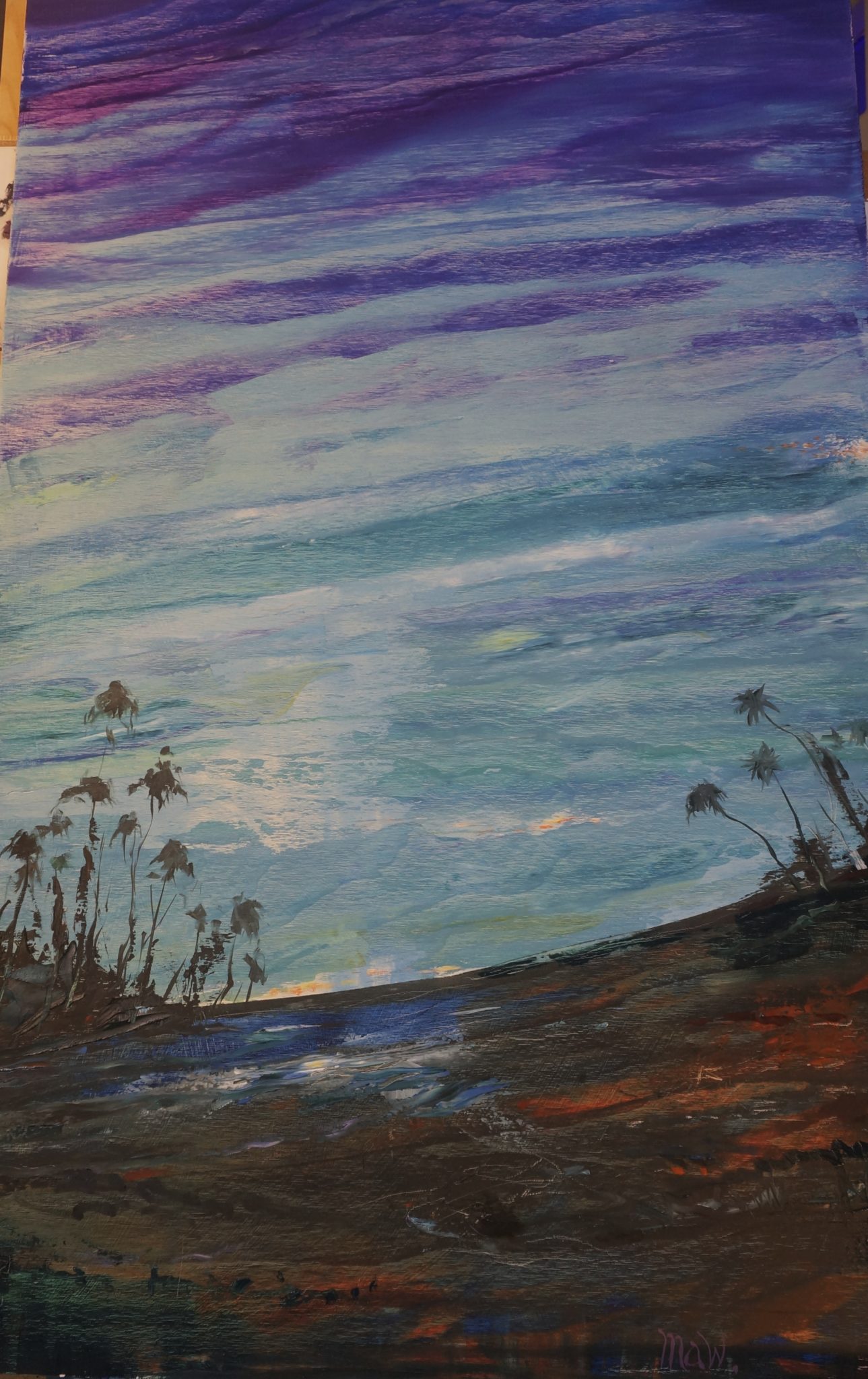
Choosing to produce a drag painting on ply board is a tedious process.  The end results however are not possible with canvas.  The canvas is too flexible and the weave is not conducive to the desired effect.   The photos show the first drag of just basic colors.  The second completed image shows the finished product…notice the dark shapes in the foreground which were also dragged over the base layer, giving some wonderful surprising effects.   Here are the steps briefly for the drag painting process  outlined:

Choose any size 1/2 in. ply board and you will tell the supplier you want one good side.  Prime twice and sand thoroughly.  I routinely sand between coats but a good sanding after the second is critical.  Use an orbital sander with 100 grit.  A water based primer is acceptable.

If the panel is  three feet or larger you will need to reinforce the back with stiffeners to keep the panel from bowing or warping.  A flat, even surface is necessary  for a good drag effect but also when you frame the piece.   I use 1 x 2 hardwood as a frame stiffener on the back, glued and nailed.  Yes, you have to putty the nail holes and prime those as well.  Like I say, tedious work.  I try and do three of these at at time which helps on labor time.

Work is best done flat.  Squeeze paint directly from the tube unto the surface – mostly along one edge.  Try to think in terms of horizontal bands of color and which hues you would like to see near the top and which in the middle and which colors will predominate on the lower section.  Squeeze your paint out accordingly.  Use a squeege that is at least half the width of the primed panel.  Place it on the edge where the paint is and applying even pressure now drag from side to side without stopping.  Now drag the center section and then if necessary the lower section.

You will be quite surprised at the wonderful blending of all the paints.  Take time now to study what you have done.  This is just the beginning.  You may want to drag certain sections again or add paint and drag again.  Some areas may require lightening or darkening.  Remember that once this first pass dries you will come back with additional passes in a couple weeks.  Also in a couple weeks after the base has dried is when I add in certain overlays with a brush.

Summary:  This is a wonderful way to get started in painting abstracts.  The drag painting provides an immediate and s


Posted on Leave a comment

Corrections in Abstract Painting

In previous articles I have stressed the need to accept accidents in painting abstracts.  I have even gone so far to suggest that the accidental occurrences may even be more authentic and more alive than the attenuated brushstrokes.  Especially employing the techniques I use…that of drag painting,  it is impossible to determine precise outcomes.  It is shocking sometimes when effects are created which considerably exceed anything planned or anything executed by a skilled hand.  This is a wonderful thing.  It is like good jazz.  The static surface begins to resonate from an inner resource.  So, there is this constant tension as a painting develops between un-planned and planned executions of paint.  This tension creates a surface, visual dynamic.  The Title, Corrections in Abstract Painting, refers to the necessary process of harmonizing the various  tensions which appear all over the surface.  Visually, they should dynamically relate to one another…disharmonies need to be corrected.Alexander Sadoyan

It is important however to understand that as a painting nears completion there will inevitably be immensely strong areas.  These may result from semi planned accidents or specifically painted areas.  Conversely there  will inevitably be areas that do not work.  These are areas that are not in  harmony with the rest of the painting.  There is inconsistency in style, in rendering, in feeling or the color may be off.   This is when you will have to study your painting.  It may not be apparent at first.  You sense something is not right so you keep studying it.  The painting is basically almost done and you keep looking at it.  Lucien Freud insists he is not analytical but clearly his paintings indicate his countless refinements.  These refinements come from studying the painting carefully.  You will have to decide where the strong areas are and where there are weaknesses.  This sometimes needs to be done before the paint is dry.

Making corrections in abstract painting is critical to the final outcome.  By now you will have a good idea what the painting is trying to manifest.  You may be surprised to find that the painting is very close to what you had sub-consciously intended.  Still, your keen sense is needed now to bring those weak areas up to or near the level of the over-all painting.  Often a weak area cannot get to the high dramas (the more successful areas) of the painting but the weaknesses can be mitigated so that they do not detract from the whole.   This is what I mean by making corrections.  It is important that the entire painting works as a whole and that there are disengenuous parts that detract.  Sometimes a good artist friend who is honest can come in and give an opinion.  Regardless this is an important part of finishing up a painting.  One tip, look that there is sufficient contrast in the key elements.  Often times many of my corrections have more to do with contrast than with actual hue.

Posted on Leave a comment

Oil Paintings for Sale

There are many places to find oil paintings for sale.  I live in San Diego where the weather is excellent for street faires almost year round.  Artists display their art at parks, boulevards and outdoor venues.  It is remarkable how often you can find very good, original art at these casual display booths.  Prices are usually low and you are buying original art!  A notch above this are the juried shows.  These are often still outdoor venues but the class of artists is of a higher quality.  They have had to submit their work for approval and entrance into the show.DSC02667

Most Cities and towns have abundant galleries to visit.  These are not museums but privately owned galleries.  The gallery owner finds ’emerging artists’ who are willing to allow substantial cuts to the gallery owner, sometimes as much as 50%.  So, of course be prepared to spend considerably more.  These relatively small, private galleries are business ventures who are quite discriminating with what kind and type of paintings they will display.  They are usually looking for an artist who generates a consistent style or theme.  It is dissapointing to find art work that appear as spin-offs of tried and true, often nostalgic themes.  Kinkaid (the painter of light), was very successful selling these bucolic, nostalgic paintings.  There were many people who were satisfied with a decent print (a giclee) when the gallery prices for an original began to be in the $20,000 – $40,000 range.

There are many art lovers today who appreciate good oil painting but want to search on-line.  You will be surprised at how many options there are through Google.  Some web sites are poorly arranged and difficult to navigate, but there is usually a phone number to call.  Many emerging and even mature, seasoned artists have elected to let other established sites carry their work rather than develop their own.  These kind of sites are often professionally set up and easy to navigate.  You can arrange for delivery and make payments through portals such as PayPal.  The actual oil painting, once delivered will always be more stunning, more alive and more dynamic than what you view on line.

Posted on Leave a comment

Abstract Drag Painting Details

In this brief article I shall provide some important details for executing a ‘drag painting’.  Abstract drag painting details will help you get the results you are looking for.  To begin with I would strongly recommend not painting on canvas but using a hard surface such as 1/2 inch plywood.  If you decide to use a larger format, say 36 ” x 42 ” you will need to screw or nail support backers to keep the board nice, straight and flat.01.jpg

Any water base primer will work to prime the plywood or panel surface.  I usually apply at least two coats.  It is necessary to thoroughly sand the surface and then get it clean before starting your drag painting.  You may want to refer to my previous articles but a drag painting is simply applying oil paint with a hard squeege, usually from edge to edge in a slow, steady pull.

Canvas is just too flexible to get a good press with the squeege.  Besides I actually prefer the ply surface because of all the interesting effects that occur when the paint (during drag) gets caught in all the small wood ‘pits’.  There are several good methods of dragging.  One is to press hard and drag.  This leaves a thin skin of paint on the primed surface.  I will usually look for patterns and play with them, dragging back and forth to accentuate those emerging patterns.  Often with this heavy press method the actual grain of the ply will emerge even through the primed surface.  The other method is to apply the paint more thickly and drag that side to side.  Across the board this will create its own affects depending on where you placed your pigment.  I tend to squeeze paint direct from the tube in random placement across the surface.  As the paint is dragged it will pick up and disburse the oil paint.  On the first pass try to go all the way from edge to edge.  You will be surprised at the very interesting accidents created as the pigments mix on the surface.

Look for patterns that have been accidentally created.  Re-drag where you think it will accent these.  Add pigment and drag again in you wish.  Drag paintings often take longer to dry due to the heavy use of oil pigment.  I set my aside for several weeks and then pull them out and study them.  I am looking for strong or weak areas…areas that are not so interesting will require a new application.  By passing over with new pigment over the existing hues even more interesting effects are created – often certain ‘skips’ that are quite intriguing.  Sometimes I will even come back with selective brush work additions.  This can add visual interest and contrast, though use brush sparingly…try not to have them especially obvious.  You don’t want to detract from the free, spontaneous look of the drag painting.

Posted on Leave a comment

Buying Abstract Art

There are essentially four categories when choosing to buy abstract art.  There are of course the greats.  These are the masters who, starting with Kandinsky forged an entirely new style of painting.  I know of only a half dozen people personally who could afford a Picasso or Miro or Gris or Braque.  These paintings are usually in the hands of a few collectors and the rest reside in museums.  Prints of course, can always be purchased through clearing houses.15.jpg

Secondly there are artists living today who are still producing…men such as Gerhardt Richter but their prices are also very, very high.  The dilemna with artists such as Richter is that their work is so popular they complain about not having time to paint.  So much time is spent administering sales and shows that there is little time to be truly creative.  Many of these esteemed and established abstract artists sometimes find themselves in fairly long droughts of being unable to produce new, substantial work.

There is a third category and in terms of price these artists post prices for paintings that is much more in the reach of the average art lover.  They are showing in galleries and the galleries have commissions as high as 60%, but they are selling.  With the internet these artists can be sought out much more easily than before.  They are often at the peak of performance and produce very exciting, dramatic work.  By visiting galleries or by searching the internet these fairly well established artists are creating excellent abstract work.

The fourth category is that of the so-called, ’emerging artists’.  They are quietly painting away in England, America, South America, Canada and Australia – all over the world.  Many of these artists are so involved in developing their craft, they have little time or expertise to develop even a decent web site.  Emerging artists who paint abstracts, when found, can present some excellent opportunities.  First of all you may find one whose style truly resonates with you personally.  The work can usually be purchased in the $2,000 – $5,000 range so there is a very good chance the work will increase in value.   The important thing is you are purchasing a true,  original painting.  Some of these artists who have begun to sell and who have managed to place their work on the internet can be more easily discovered just by simple word searches.