Posted on Leave a comment

Oil Painting Techniques

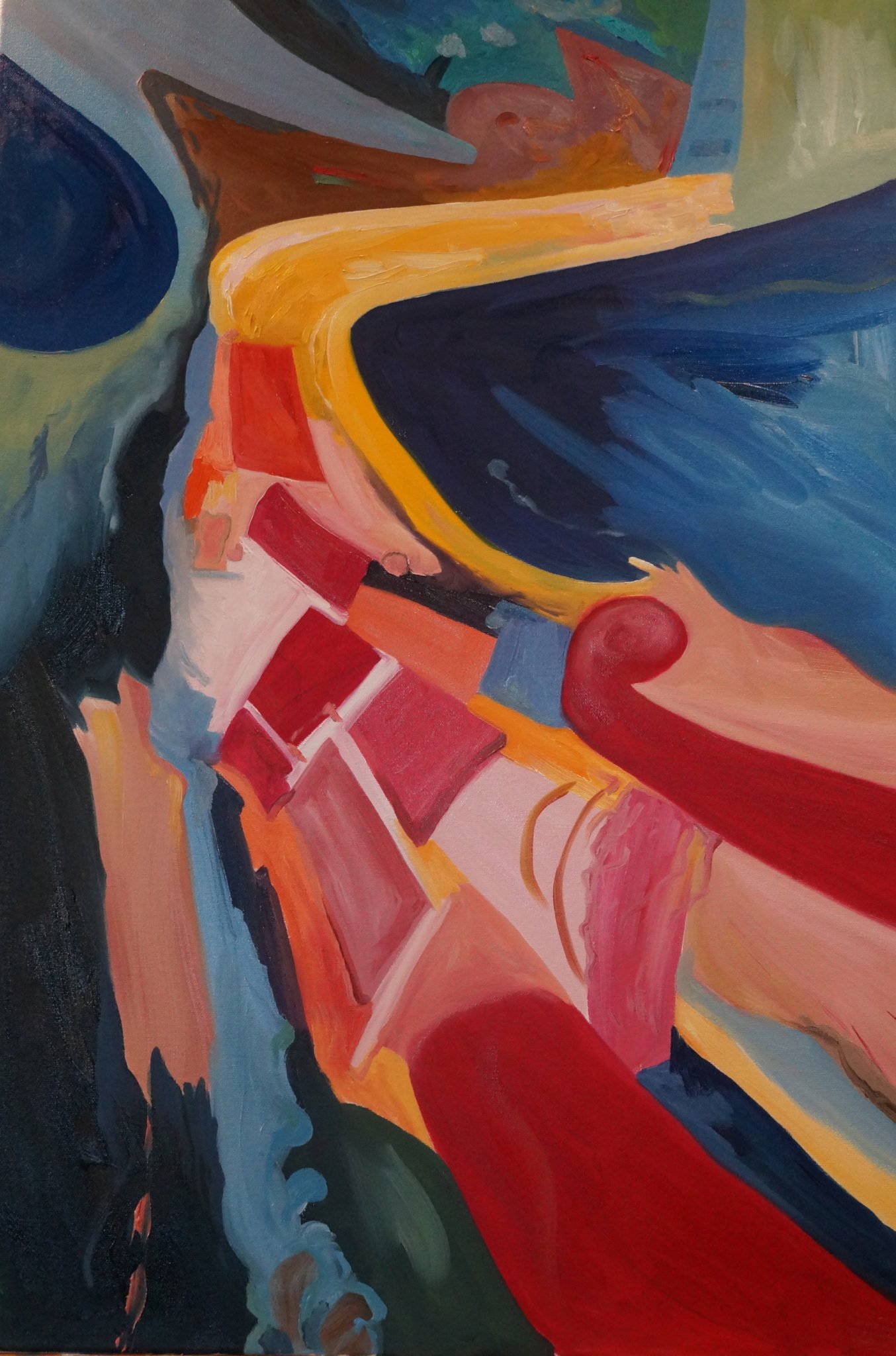
In this article on oil painting techniques, I want to explain how to overcome inertia and how to begin a work. My reference is primarily to abstract oil painting but the same principles apply even to architecture and music.DSC02554
It is a misconception to believe that a work must be completely worked out to begin. This is a fallacy and prevents many young artists from creating. After all, if we are to be artists we must paint and we must paint often. The technique is to consider your painting in two, distinct steps. The first is to put down the initial idea, the rough concept. Do so with the intent of getting the piece begun and put out of your mind the idea of completion.
In a drag painting I use this process. The initial thrust is considerable. First of all you need to block out time, you need to have gathered the right materials, there cannot be distractions and there needs to be at least a concept in mind. All of this requires a certain amount of energy and planning. This is the first phase of the work. Trying to think through the entire process and the second phase is too overwhelming. It is not necessary. Tackle the first phase first and get it down on canvas or board.
The second phase comes later. I usually spend a good deal of time studying the first, initial thrust. By now I have a better idea of where I was going and what I was trying to achieve. My sub-conscious has been awakened again and I can now visualize at least a partial manifestation.
ALso too, and this is the great mystery, the painting begins to dictate itself. It begins to have a voice of its own. This is the other reason to break out your painting in these two phases – to allow the work itself to define. This is why we study our work. I have a photo of Picasso standing in front of a painting partially completed. He has no brush in hand. He is just standing and studying. He is to me, letting the painting speak to him. Gerhardt Richter will always bring a painting (supposedly complete) into another well lit, white walled room. He will over a course of weeks go into that room and study it. He is deciding if in fact the painting accomplished what he had purposed or if there is something else that needs manifestation.
I will often find that a paintings contrast can be enhanced or a certain design element made stronger or an area is too weak and can be made more dynamic. This is the advantage in using this method of constructing paintings in these two phases. The important thing is always to begin. This method provides a means to overcome initial inertia and to get started.

Posted on Leave a comment

Starting an Abstract Painting

03.jpgIt is possible, to some degree to remove the mystery in starting an abstract painting.  There are painters who suggest it is a magical and spontaneous affair,  that it cannot be defined and that the process cannot be understood.  In my own experience I do not find this to be the case.   Kandinsky broke down his own work into several ‘categories’.  When we read how he separated these categories it is clear that he was identifying the process.
In this brief article I will suggest several styles or directions to you.   I think this will be helpful to get you started.  If you already are painting abstracts this might suggest a new direction for you to discover.  The most well-known abstract ‘living’ artist today is Gerhardt Richter.  He is best known for his drag paintings.  This is a method of applying paint to one end of a canvas or board in fairly random gobs and then dragging these across horizontally with a wide, flat squeege.  With his very practiced eye, he produces some wonderful effects.  These effects are part by accident and part by planning.  Not knowing the exact outcome is what makes this process so intriguing.  I have found this to be an excellent way to free oneself from repeating realism.

A second method for abstract painting is what I classify as free form shapes applied by brush.  There are many YouTube videos of this style.  Artists seem to be attracted especially to this means of expression.  Large and small shapes are created in swirling patterns giving the canvas a very free-form, spontaneous effect.  The challenge in this type of painting is having some good fundimentals in color harmony.  However, color can be quite forgiving when one color is juxtaposed adjacent to another.  Often sharp, contrasting lines are added to this type of abstract expression.  This type of art reminds me of good jazz.  There is nothing recognizable, it is definitely spontaneous and relies on sub-conscious responses.  Some artists would say it is an effort to express an inner feeling or a composite of inner feelings. Hans Hoffman was one of the first to paint in this fashion.

A third example of abstract art seems to stem from the cubist movement begun by Braque, Picasso and Juan Gris.  Also the tightly constructed work of Marcel Duchamp.  These are typically more thought out compositions.  They may even have recognizable elements.  Objects, colors and shapes are in defined planes.  Abstract paintings such as these often appear geometric or architectural.  If you have painted realistic scenes of buildings and landscapes and are wanting to express yourself more freely, this type of transitional abstract painting may be an excellent springboard for you.

These are three to consider.  There are of course many.  Starting out with one of these will no doubt help you to define your own vernacular and your own special means of expression.  Emulating another style provides a direction and by studying the abstract artists of the past gives us an opportunity to choose our personal path.

Posted on Leave a comment

Fear of Abstraction

Fear of abstraction stops a lot of good artists in their tracks.  Certainly understandable.  We were taught to view our art through the eyes of realism.  Imagine a famous pop artist  who gets on stage and begins to play a piece he has never played before.  His band is expected to follow along.  This kind of thing doesn’t happen does it?  Jazz however, is an exception and jazz can be brilliant. It takes a brave soul to play real jazz. This brief article will explore how to overcome this fear of painting abstracts in oil.

Where does the fear come from – this great hesitation to paint in abstraction?   Children have no problem with this, do they?  We admire their lovely free-form shapes, wild swirls, beautiful colors merging with each other.  Then something switches in our brains about the age of twelve or so.  Maybe it comes from our education system or maybe it is just a natural progression.  We start happily with finger paints and then, in adolescence  if we can’t paint a decent human figure or a discernable tree we are considered un-artistic.  Usually we give it up.

After that it is a difficult climb.   It is a slow process of undoing our brain synapses so we can envision an abstract piece.    How do we paint something we can’t see?  How do we paint un-reality?   For me I just kept painting and experimenting and I found over the years there was this need to exxagerate a color or shape.  It felt better and even more natural.  I began to read  the psychologist Jung and then Tolle.  I read a book by Gerhardt Richter.  In general I began to read more.  I was discovering the inner world that they spoke of.  It was for me like pulling away a long drapery of gauze and I saw behind it.  I began to experience Jung’s sub-conscious and what Tolle called the awareness of Presence.  I actually found myself becoming more aware – not only of the shapes and forms in my natural surroundings but also more aware of my own, unique inner experience.

I bought myself new canvas and more paint and in 2009 began to paint abstracts.  I was no longer painting what I could see externally.  I was now painting what I was experiencing internally.  I was painting a feeling, an emotion.  Sometimes I felt I was painting in response to something I had dreamed.   Remarkably I discovered that a painting could in fact develop on its own – it could itself dictate the next shape, the next color.  After that discovery whatever residual fear I had seemed to vanish.  It seemed I was more a facilitator than the creator.  I felt very connected to (I guess I should say), the greater Universe.  It felt like I was working out some solution when I painted abstracts.  I felt like I was a vehicle to manifest something that was very deep within my psyche.  This became enormously invigorating for me.

I must confess this was not an easy process and it took awhile.  I was sixty-one.  All my life I had essentially painted realistic forms.  There were small ventures here and there, experiments that hinted towards abstraction but the breakthrough for me was dramatic.  I am a believer in painting abstractions.  I think it should be taught in art schools right next to life drawing.   Any semblance of fear or trepidation could progressively  be canceled.  The world of music, of dance, of sound, of prose could be greatly expanded.  This type of art can be transformative.   It can help us better understand our own consciousness.  If we can understand our own inner presence, our real nature than we become more alive.   Abstract art can definitely foster this kind of discovery and bring forth a very personal and transformative creative experience.DSC02543.JPG

Posted on Leave a comment

Comparing Music to Abstract Art

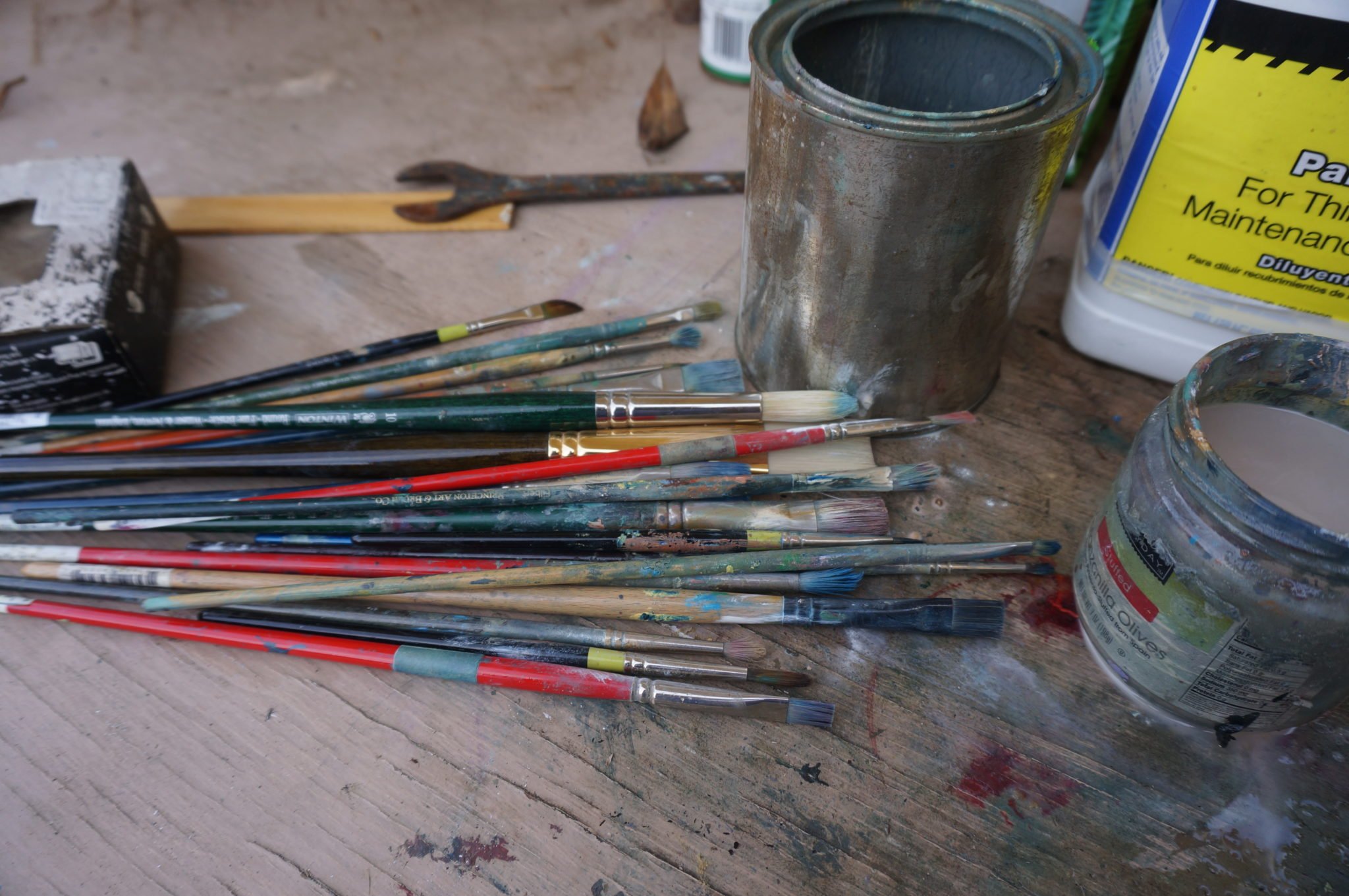
Comparing music to abstract art is surprisingly straightforward.  I have shown in the photo various brushes I use for painting.  Whereas the musician uses an instrument such as a piano or clarinet or violin, the painter uses canvas, paint and brush.  These are tools for expression.

Abstract art is probably more closely related to jazz, especially in the development of a piece.  Jazz typically starts out with a fairly regular rythmn until the lead musician begins to experiment with improvisational riffs.  Abstract art will often employ established formats such as correct balance in a painting, but after these basic tenents are thought through then an artist can freely develop the painting.   In a good jazz piece there is an exciting sense of something being created fresh and new.  This also happens in abstract work.  One long, pure jazz note seems to beckon another spontaneously.  Also in abstract painting,  a certain color or shape will often beckon a different contrasting color or shape.  Both in jazz and in abstract painting the artist must pay attention to an inner source.  The development does not come from responses to exterior forms, but from (shall we say) sub-conscious responses.

Sharing this kind of psychology is one of the primary links between music and painting – especially abstract art.  Kandinsky was a musician before he was a painter and was fascinated with how the two mediums would cross- pollinate each other.   What makes music interesting is the various crescendos, then falls, then long riffs that make for a dramatic piece.  Abstract painting, when it is successful needs to also contain these dramatic elements.  Though a painting is essentially static, it can appear to the senses to be alive and moving, sensual and profound.  This is accomplished by the intelligent use of color, contrast, shape and movement in a piece.


DSC02551

Posted on Leave a comment

Oil Painting – a Direct Medium

Oil painting – a direct medium, may sound like an odd title but is in fact a very distinctive truism in the art world.  We often hear how sad to read the book, that it would be so much better to see someone live, that the words don’t do justice to the message –  to the essence of the message.  Well, in the world of painting in oils there is not such a restriction.  The medium allows for full unexonerated expression, limited only by one’s vision, energy and skill.

There is an unlimited range, certainly in the pallete of colors but also in the area of subject and visual impression.  We have a vast storehouse of artistic expression to historically go back and feed from.  Are you convinced?  Want to start painting?   Or are you stuck in the world of black and white print?

Don’t get me wrong, the ability to transfer feeling, emotion and psychology through print to our minds is undeniable.   I once ventured into the writing of a novel.  What started out as a creative jaunt turned into a four year struggle to see it completed.  It definitely stretched my abilities but also patience to nurture something for that long,  tweaking it until it has just the right effect and  the painfully correct nuances.  Yes,  good writing can do much but more for the actual author  than the reader.  However the oil painter has a medium (a vehicle) that provides for endless opportunity.  As a painter’s skill develops then one is compulsed to see what can be done next.  That is, the painter  takes from each experience definite improvements of skill.  It is only natural to want to explore these new skills.  Sometimes what we want to say needs improved skill to convey what is wanting to be conveyed – especially those more subtle but important psychological statements.

If we think that ‘A Direct Medium’ is a more pure means of expression, we are getting close.  I often listen to music when I paint because it is often that a very pure note is hit or a very beautiful song and that beauty, that integrity and that purity does transfer into whatever it is I am painting.  Music I would likewise consider a Direct Medium though of course, less tactile that the medium of painting.  Can you imagine carving away at a block of granite!DSC02551

Posted on Leave a comment

Negative Space in Abstract Painting

Negative space in abstract paintingpicasso-three-musicians-1024x922 can be a critical element in the development of your painting.   I had one instructor who especially emphasized the awareness of negative space in both drawing and painting.

Negative space in drawing helps immensely to define and measure the positive image.  In Painting however it creates impact and power by defining typically highlighted elements of a painting – often those important  elements that we want the eye to draw upon.  Negative space tends to recede and of course positive space or (elements) come forward.

It is interesting to discover for yourself how certain colors work towards this negative recessive part.  These colors are often muted and often darker in tone and thus help to thrust an image forward.  Some artists think in terms of contrast which is fine, though heightening awareness of those negative spaces and interweaving them adds a certain vitality to a painting.  Balancing negative and positive spaces should always be considered, even in a free-flowing abstract piece.  It is even true with work by Jackson Pollack.  Studying his work you will see very definite balance of these elements.  This is striking considering the apparent randomness of his so called drip paintings.

One interesting practice is to start with negative forms and let them develop the positive forms rather than the reverse.  By giving these negative forms good shape and by balancing them, the formation of the positive elements will gain even richer, more dramatic force.

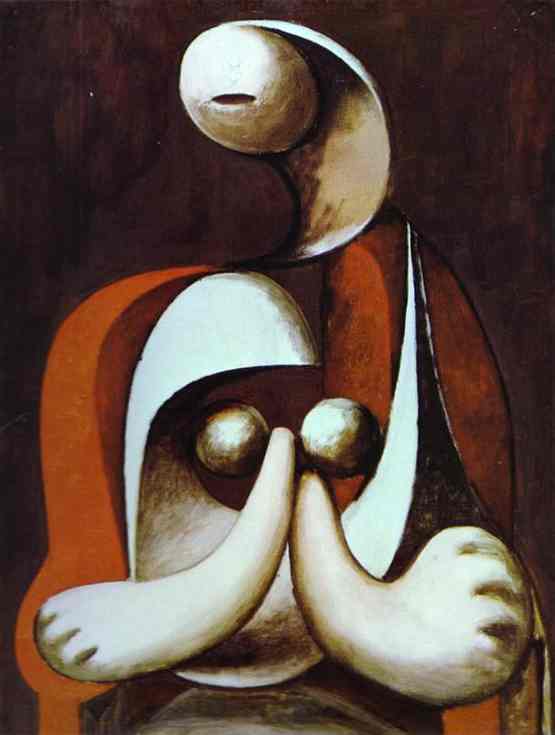
Painting example by Picasso.

Article by Michael A. Wilson

Posted on Leave a comment

Concept Sketch for your next Abstract Painting

Use a concept sketch for your next abstract painting.06.jpg
I personally do believe that a painting can and will evolve by its own volition. An artist through practice, will develop a sensitivity to the development of the painting. Through this sensitivity various forms, impressions and color combinations will become apparent. Responding to these and allowing them to manifest is a very big part of the magic of abstract painting.
You will find it is sometimes necessary to develop a concept sketch for a painting. An idea might come to you at a time when you are away from the studio. Write down something briefly so it is not lost. It can be frustrating to experience an image or feeling come – something that seems important – and then it vanishes. This initial quick sketch can be enhanced later on paper and then when you have time, this sketch can be transferred to the canvas with pencil. I use colored pencil for this. A conte crayon also works well.
If the abstract piece is geometric in nature your sketch will be more considered and more thoughtfully rendered. If the abstract in mind is more freeform, then your sketch on the canvas will of course be very brief.
Take some time to now study the drawing on the canvas. Ask yourself what it is your are trying to say or express. Is there a feeling you are after? What colors will work best? Are the edges going to be soft and blended or hard-edged? Try to develop the painting in your mind, at least initially.
Now begin…perhaps you will want to paint the most dominant form first. Perhaps you are attracted to a certain color. Keep in mind the colors that will be placed next to each other and how they will be blended to each other. The important thing is that you have begun. You are painting because after all, if we are artists we must paint. Even when we are not sure of what we are after, we must begin to paint. The concept sketch has helped me numerous times to overcome inertia and to get started. Often the sketch is so simple but the painting will often miraculously take on a life of its own…it begins to express itself. One form seems to lead to another form and one placed color then opens up an opportunity for the next. Balance can be achieved through color and through form and these two elements you will find, also become manifest.

Posted on Leave a comment

Oil Painting for Beginners

Painting in oils is a truly exciting venture in expression. By painting in oils you are historically connected to a long lineage of master painters. There is a magic that lies in the oil medium that acrylics just do not possess. First a word about materials.
I have touched upon this in previous articles but you can now make most of your purchases on line. Gamblin, Winsor Newton and Grambacher are several of the excellent companies that produce quality pigments. You can start with just basic colors such as Cobalt Blue, Cerulean Blue, Cadmium red, Vermillion, Hooker’s Green deep, Viridan and any hue of yellow. In addition I would suggest always having on hand, Yellow Ochre, Raw Umber and Burnt Sienna. You will be able to 13 a lot with just those colors. Try to buy the larger, more economical tubes. Buy an extra tube of white as you will use more of the white than any color.
In terms of pallettes I grab anything flat I can find but I must admit a preference for the pads of disposable paper palettes – the ones that have the waxy surface. You will need a reducer such as paint thinner or Gamblin’s Neo Megilp to add a silky feeling to your paint. I mix the two together. In terms of brushes, start off slow and buy a few to decide which style and brand you prefer. Remember that brushes can’t stay out long in the air before drying out. Keep them in a little thinner and clean them regularly so that the paint does not build up near the ferrel.
IF you keep a sharp eye there are periodic sales on canvas. You can start small and build up to larger sizes. You can also paint on any flat board or even on primed plywood. Some artists actually prefer old barn siding.
You then have your paints, thinners, pallete and brushes. Make sure to have some rags close by, good lighting and of course decent ventilation. As a beginner I would suggest starting off with a decently prepared sketch. Use this sketch as your guide. An easel is not critical when you begin- any good-sized table will work. The important thing is to learn about color mixing and about how each brush feels for you. You will learn how much thinner to add and how to apply the paint. YOu will discover just how fun it is to paint in oils. There are of course, many good teachers and classes available in just about any City, and also some excellent tutorials on-line.

Michael Wilson 1/2015

Posted on Leave a comment

Wet Edge in Oil Painting

Earlier in my efforts at oil painting it was necessary to stop and start a piece due to the edge of one color touching another.  I would let one dry first before coming into it with the adjacent color.    Though very frustrating this is often unavoidable for a good, crisp line where colors are to be distinct one against the other.

With practice however, muscle memory in the hand begins to be more reliable.  Even though one color is still wet, I can now paint right up next to it with another.  The line between them is still crisp and sharp.  This has taken a number of years but the consistent effort is paying off.  I am now able to complete a painting while the concept and intent and the emotional thrust of the piece is alive.   It is possible with a mister to keep the surface fresh for quite a few days.

I will suggest a few things to help you along the way.  One is to use a very good, natural hair brush or one of the new synthetics that has good spring.  You want to hold enough paint to drag the line along for a good distance.  As I apply one color and as it approaches the edge I will attempt to not have the paint especially thick.  The brush should not be ‘loaded’ along the edge.  Now with the new, adjacent color load up your brush slightly more and carefully pull your line.  With enough practice you will not have a bead along the line, but just a good, straight edge.  Maintain the original adjacent color on your pallete so that if you do sneeze and wave over, you can come back with the first color and straighten it out.

The wonderful advantage of painting with a wet edge is that there are places where you want the colors to blend along an edge.  With this method all of these options are yours for the choosing because the oil has not set up yet.  You will notice in many of Kandinsky’s work his edges are often blurred and blended one into the other.  When he needs to have a sharp line, he has that option as well using the manner I described above.

Michael Wilson  1 / 201515

Posted on Leave a comment

Techniques of oil painting #3

This is a brief article on developing an abstract painting.   Sometimes I find it useful to work on a sketch first.  This sketch can be brief, in fact it is better left brief.  The intention of the sketch is to put down the essential concept in mind for the painting.  The sketch of course will be small compared to the painting your are planning.   Of course for drag paintings I rarely use a sketch but I will think through the proposed colors and I will write these down.  It helps me to write down the colors for any painting I am proposing, as a general guide.

There are times when a painting begins and then as it develops starts to falter.  Fortunately with oils you can come back the next day and begin again, making reparations where necessary.  This week I began an abstract composition (not a drag painting) and though I was pleased with the upper half, the lower half did not convey my intentions.  I had painted it reasonably close to the sketch but it was not translating unto the canvas.  This sometimes happens.  I studied it for quite some time but eventually elected to wipe out the bottom of the painting with paint thinner and a rag.  I left the upper section intact.  I will let it dry now and renew painting the bottom later.  Will this detract from the initial energy of the painting, the initial force of it or will the finished piece appear as two different paintings?  These are all possibilities.

The point is that we cannot always expect a painting to convey our original intentions.   It could be that the initial design was not fully understood.  It could also mean that the force of the concept was too weak and made expression difficult.  It can also mean that the painting might be transitional and that the means of painting (the means of expression) are experiencing change.   Abstract painting is like that.  Trying to resist this can be futile.  Change in style and expression is inevitable and we may start a painting quite unaware that a change in style is needed to convey the new impression.  This is I think,  what happened to this painting…I am needed to re-interpret how to say what I want to say.   I would expect this transition dillemna is true for realists as well as the abstractionist.  Part of the reason I write about the process is to understand my own psychology.  By understanding the changes in my psychology, I can better translate these into the next painting.  This one however surprised me.  Fortunately I can re-think the painting and work on the lower half once I get my bearings again.  It probably will be necessary to work on additional sketches.

Michael Wilson – Jan 2. 2015