
Latest posts by michael wilson (see all)
- JORDAN RIVER - February 5, 2019
- Inspired Art - August 2, 2018
- Waiting for Inspiration - July 31, 2018
- The Bridge between Painting and Photography - July 31, 2018
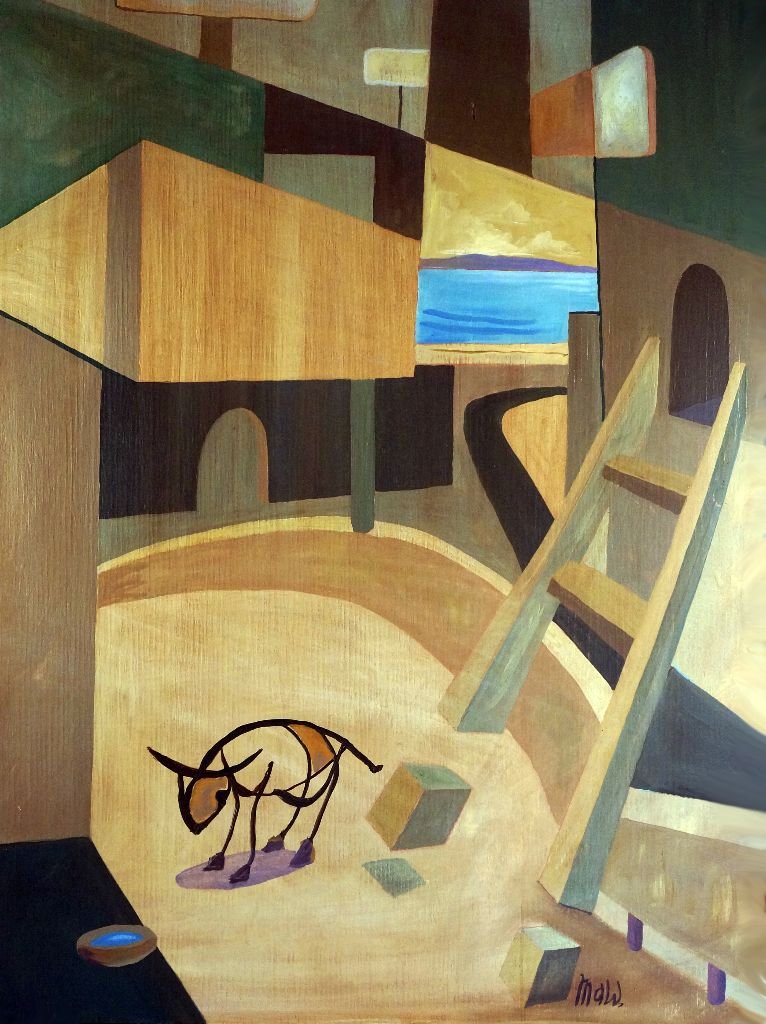
Most artists, myself included are rarely able to establish the correct tone of a painting right from the beginning. How to establish the correct tone and hue in a painting is of course vital to the effect of the piece.
Tone and hue in a painting is different than contrast. It has to do with color saturation, how much white is added, how much umber or black, but also describes the actual color or hue for any given area of a painting. Because a painting builds incrementally in relation to all the adjacent hues, creating the right tone and hue is nearly impossible from the beginning, unless you are Michelangelo reincarnated. For narrative paintings that have background, figures, objects and foregrounds I try to apply the first paint application with careful and delicate brushstrokes so that it lays in flat and even. As the painting develops and you can better understand what hue and tone is correct, you will not be hampered with halfhazard and distracting brushstrokes.
In oil painting all base coats are dry enough in a few days to go back and adjust them. Usually in my case, they are typically deepened. You will find as one area is deepened (less white added to the pigment), then adjacent tones will also require the same relative treatment. In this way, little by little the painting develops into a unified whole where all colors are suffused with a pleasing balance, one to the other .
The point to stress is not struggle getting started by not getting the right tone of the painting. Put down what you think it might be in your imagination. Make your best mix and paint. Remember that later tone changes are easy enough, just paint over the existing. Sometimes a very pleasing effect is created when overlay tones are applied almost as a wash allowing the original tone under the wash to come through. This kind of painting requires patience and time. The result however will certainly pay off creating the tonal effect you were after.