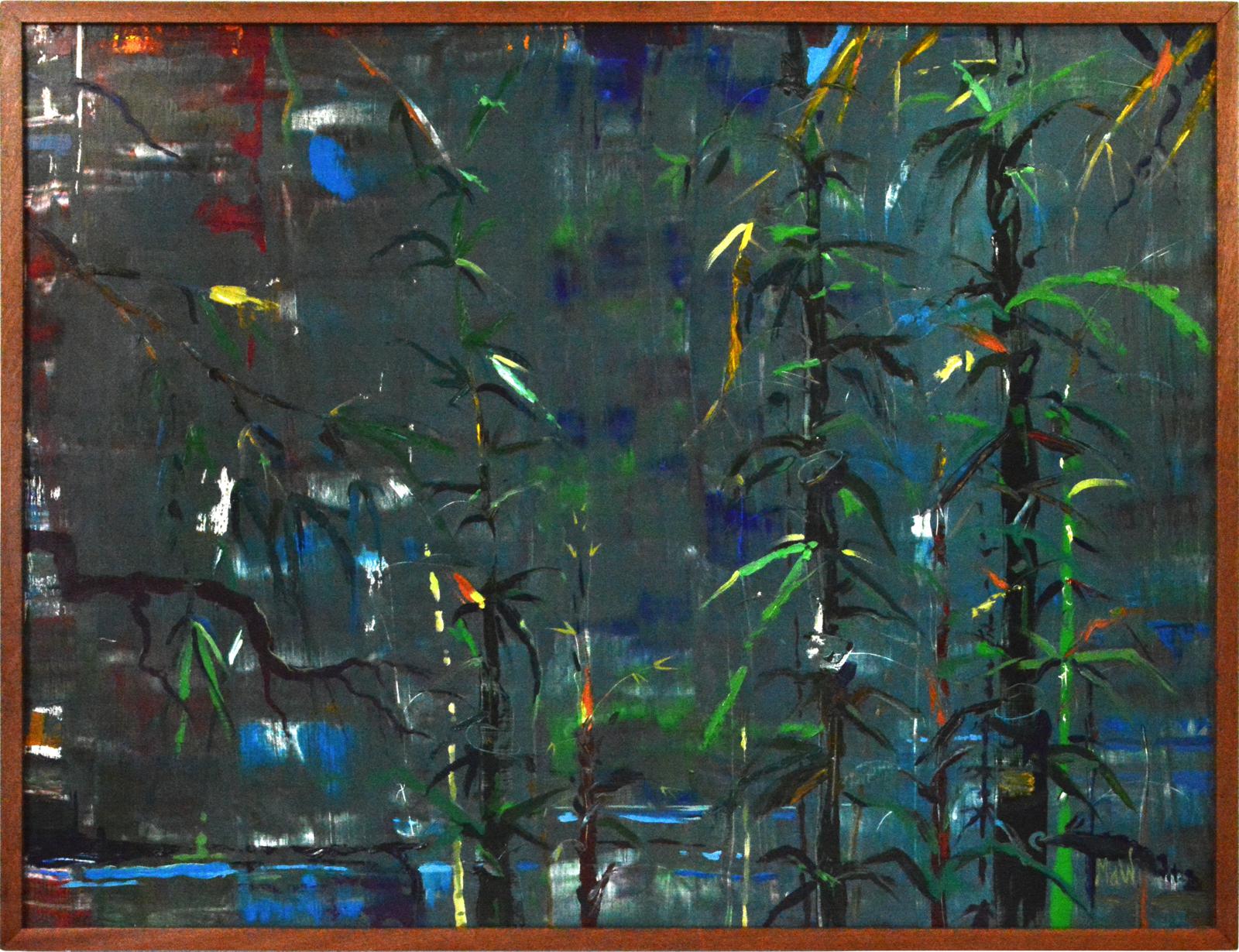
STARTING A DRAG PAINTING IN OIL
From previous articles I have tried to describe the process of starting a drag painting. Without some motivation, some method even – a painting will sit dormant within one’s psyche, unmanifested. I have also mentioned in the past that there is no need for some grand theme, some profound thought or something that resembles symbolism. These certainly will come, for example we can see symbolism in so many things. Today at the stop light the young man behind me took out and lit a cigarette while we waited in traffic. There was an edge to him, a certain nervousness as he tapped and popped out a cig., then lit. There was a furtive look in his eyes as if he was not quite sure how this day would turn out – for the better or for the worse. When the light turned green I pulled forward to make the first left as he drove by to the side in his black, noisy’ guys truck’ – vroom. Right there is a lot of symbolism that I might interpret…all kinds of layers having to do with ‘if there is true peace in our lives and what might be the right path?..’ Or just the eagerness of youth, the searching and even the bravery of becoming a man or woman – expressing themselves, discovering their own unique motivations. All kinds of imagery and symbolism.
But that is not the stuff paintings should be made of. It tends to appear false, plastic and disassociated. It is the kind of intention that stops too many artists from actually painting. I think too often we are straining to paint something significant. IF we do not paint then we are not truly artists. The process must be much more intuitive and inspired not from external influences but by internal responses. These responses come often in the most slight bits of information, small visual ticks, short, brief hints that sometimes appear only as feelings or sentiments but portend much larger contexts. We need to respond to these as authentically as we can. It may only begin with just a very small brushstroke. The thing that fascinates me about drag painting is that the brushstroke is then dragged off by a small plastic squeege. The plywood then shows through and there is a distinct accidental quality to the two processes – first the brush applying the pigment and then the squeege dragging most of it off, indenting into the pores of the wood.
Inevitably, if you will just get it started, the motivation to work more will tend to rise up if we can keep from being distracted. A very large part of being an artist resides in his or her ability to block out distractions – both mental and outside of us. It might be like playing in a concert as a musician. The same concentration is required and more so because something is being created that is completely reliant on an organic response and then transmuted to a physical response by the artist’s hand. We are indebted first to the impressionists who declared that what was before them, without contrivance was quite adequately beautiful. They created their beautifully intuitive paintings with honesty, trying to be authentic to the impression. In a similar way, so do abstract artists, only they are transmuting something honestly from an inner source. THese inner sources often just unfold in small windows. We open one and then discover another, and then another. It is a fairly natural process which sometimes feels quite magical. The key is allowing yourself time to open that very first window – that small dab of impression as when a child makes an arc in the wet sand. Because of its inherent accidental qualities, drag painting is an excellent way to begin to paint abstractly. By starting a drag painting in oil you will be surprised at the good results.
