Negative space in drawing is one of the foundations or cornerstones for academic drawing students. The fundamental purpose of utilizing negative space has to do with measurement, especially when faced with drawing the difficult human form. When an arm is raised, the triangular area under the arm pit is considered negative space. When a knee is raised and forms a V, that area is called a negative space. The value lies in how we visualize form. Most student artists find it easier to read the negative space areas than the actual angle of a raised arm or bent knee. Calculating a correct angle is difficult but visualizing a negative space is usually easier, but it is also a way to double check the angle of a form (the positive image). 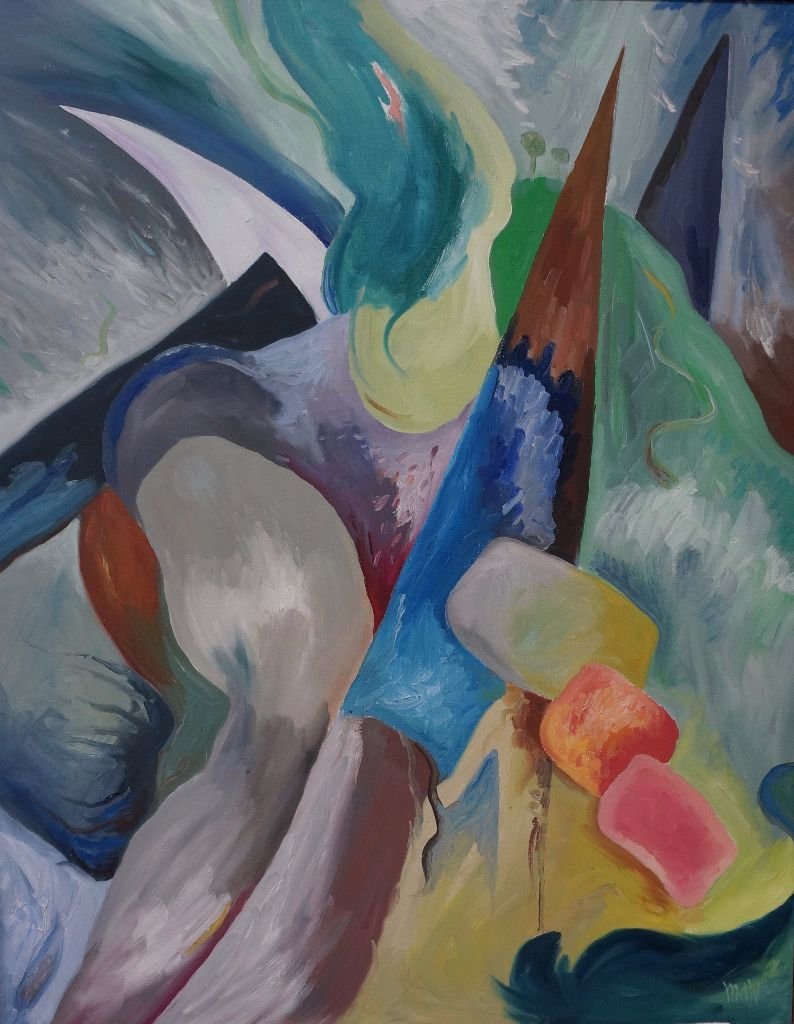
It is interesting for me to study paintings by the masters to see how they employ negative and positive space throughout a painting. By being aware of the two opposing forces a painting can gain in dynamic force. For example when two figures (say by Picasso) are painted, one on the left and one on the right, there is a space between them and this space is considered the negative space. Artists such as Picasso would pay attention to this area and work to have those negative spaces relate or better inter-relate to the positive forms (figures) on either side. There are many intriguing subtleties to paying attention to this area of painting – how negative space affects and enhances the positive forms. Sometimes negative space is interpreted as background but it is much more than that. It literally should define the positive forms. In good painting it serves exactly in that capacity. The negative space is not mere background but should be handled carefully to enhance and give vitality to the prominent positive forms of the painting. This is as true in Abstract Art as it is in more classical styles of art.