

Latest posts by michael wilson (see all)
- JORDAN RIVER - February 5, 2019
- Inspired Art - August 2, 2018
- Waiting for Inspiration - July 31, 2018
- The Bridge between Painting and Photography - July 31, 2018
Every aspect of a painting cannot be dominant. There is always the need for what I might call ‘peripheral passages’. These are those subordinate areas in a painting that support the main elements of focus. Typically unseen by the viewer (seen but not especially recognized) these support elements are vital to the success of the painting. Because they are subordinate passages they are not seen as critical to the entire image yet they play a key part in getting the message across. They enhance the areas of main focus. They provide a substantive base for the painting in general.
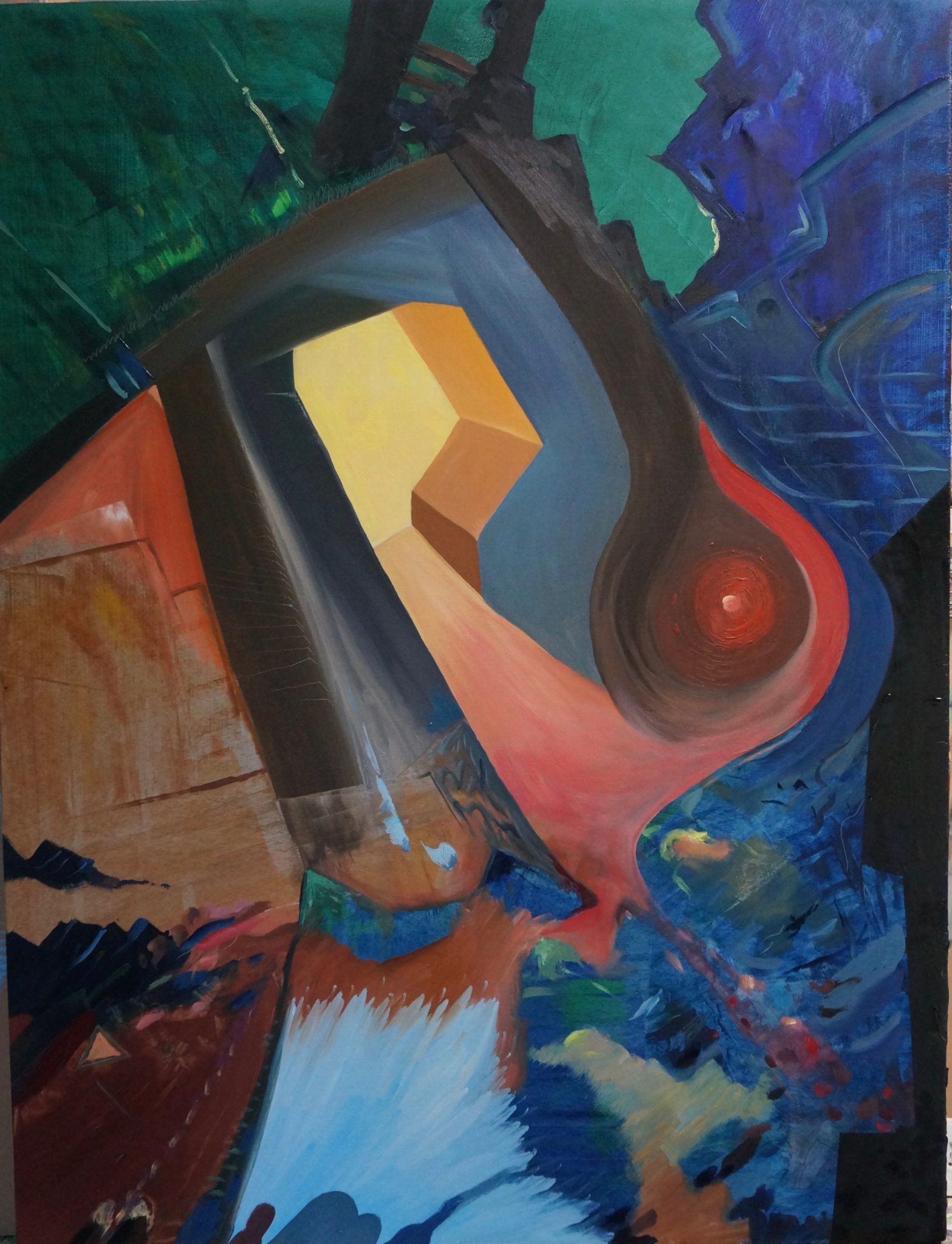
Peripheral passages are those areas that direct the eye towards key elements. They often provide a mood and they will often be different one from the other. In the recent painting Emergence, there is a brown area on the left side of the panel that has been applied and then carefully scraped to reveal the texture of the panel underneath. Then in the upper right is an area predominantly Prussian Blue and Ultramarine Blue, very dark that functions to set off the centered and key elements of the painting. These are two examples of painted passages that uphold and provide a base for the general painting. By passages I merely mean areas of the painting that when looked at closely are distinct from other areas – they have their own distinct characteristics.
If these subordinate areas of a painting are not rendered carefully, if they are not in balance and in harmony with the rest of the painting the overall result will be ineffective. Artists will often say that a painting is only as powerful as the subordinate elements and by that they mean that if these peripheral passages are confidently rendered they give the required force and energy to the main focus of the painting. They cannot be casual, in-elegant and un-related areas of the painting. They must relate to the entire painting dynamically…they must relate to each other as well as the main design elements of the painting. So consequently there is the interplay of structures. The painting Emergence was set aside when it was about 80% complete. Several weeks later I studied it and by analysis of the elements it was clear that the peripheral passages were not adequately related. One area in particular was dynamically weak compared to the rest of the painting. The painting was out of balance. By correcting these faults I was able to bring the painting to a satisfactory completion. The main focus of the painting was fine and intact but it took correcting the peripheral elements or passages to bring a wholeness to the painting, where every element seemed to complement and relate to all the other essential elements.
Don’t know why you aren’t an art lecturer. These words paint a pretty good picture of the painterly process.