After many, many years I still don’t feel we properly understand Van Gogh and his work. Understanding Van Gogh, realizing what were his motivations, what were his intentions and what were the unfortunate outcomes will help us relate to the whole body of his work. The song says that he was a candle in the wind which is so very, very true. He only began to paint when he was twenty-seven and then produced all of his work in just a decade. They say he committed suicide but there is evidence that a teenage boy shot him in the abdomen and Vincent managed to get back to his room where he died in his own bed. The flame of his life he must have sensed, was intense but doomed to be short-lived.
There were days when he produced two and even three paintings. He completed an astonishing number of paintings within a ten year span – some twelve hundred. The bulk of these were painted in the last several years of his life. There are just a few references to the real reasons behind his eventual insanity-those which point to the absolute absorption in his work. In my attempt to understand Van Gogh I have come to a few conclusions:
The man had come to live within the contexts of his paintings, that is the reality that he represented in his paintings was more vivid, more real, more tangibe and yes, more understandable than the reality he was painting. His comprehension of any particular scene was accelerated by his interpretation.
We all know that Van Gogh was a voracious reader and writer as well. He was an intelligent man who could have done any number of things for a vocation.
He would not nor could not know just where the act of painting might take him. What did in fact begin to happen is that he chose more and more to live within the realities he had created. They were where he had made his discoveries, they were the elements that caused him to understand himself and life itself. What we think of reality itself, became for Vincent Van Gogh a particular consciousness that eluded him. It was only by defining it or reinterpreting was he able to find the core essential reality he sought for. Depending on your slant he either had found his escape or he was in the midst of discovering his salvation.
I do think Vincent Van Gogh was suffering from other physio-psychological factors, certain chemical imbalances, apparent physical challenges that helped to spiral him into untenable circumstances. It is important however to consider the broader reasons that compelled him initially and then urged him on through an intense period of creativity. When he realized what he could discover within the realms of art, the observation of nature forces, the life that seemed to surge behind a brooding portrait, Vincent Van Gogh decided this could very well be the consciousness that I seek, the reality that I have been searching for. He began to dream of painting. Forms became for him potential brushstrokes. He experienced everything in terms of interpreting by paint and canvas his impressions. These new discoveries overwhelmed him. It is said that one of the reasons he would drink Absinthe at night was to try and calm the fever of his compulsion, not to forestall depression.
There are very few Van Goghs now available to see in galleries unless you go to the one that houses most of his work in Amsterdam. They command enormous amounts of money. They tell us about the painter perhaps more directly than any other painter in History. He is not hiding behind his paintings. There is no subterfuge in his work. They burst with life, with energy and with great feeling and compassion. It is my feeling that ultimately, especially the last two years of his life when his output was enormous, he literally transferred his reality and that reality became ‘encapsulated’ within the dimensions of each canvas. Painting by painting he was building his own, private reality. From there he imagined he would be able to see clearly…he would be able to live and function in some kind of compatibility with the world around him. He became consumed with the idea, his health degenerated and ultimately he was unable to straddle those two different realities. I expect that any understanding he would gather from a new painting followed long after it’s execution. There was always then a frantic catch-up, before one painting had been digested and considered he was off to make some new discovery, some new attenuation. If perhaps he had been in closer contact with friends, some of this urgency might have been tempered – that is hard to say. Many things could perhaps have turned out better. Theo died one year before Vincent and this inevitably was the final and abrupt curve that ‘the other reality’ had thrown him. His financial support had ended. His life-line had ended, Theo was his devoted brother and his confidant but only so far as a letter could be written and returned. Vincent wrote hundreds of letters attempting to reach out and make a connection. In the end he sold only one painting.
It is my opinion that Vincent Van Gogh knew things were spiraling out of control. I don’t think he saw any good, alternative direction. If in fact he had been shot by that teenage boy and had stumbled back to his room, his thoughts may well have been that the mortal wound had come at just about the right time. He had been able to make manifest his discoveries by painting over 1,200 paintings and drawings, but he was not able to properly, emotionally or mentally place them within the context that he desired. Those purposes, deep and hidden and personally important to him were largely in fragments around him. He was unable to piece them together in to a workable whole. I think we are universally intrigued and even fascinated with his paintings because we have an affinity for the artist who attempts to unmask the world around us, the artist who helps us see the human condition, the artist who looks with compassion on our toils and our loneliness. It is often loneliness or even the fear of loneliness that occupy the thoughts of so many. No one understood this more deeply than Van Gogh. That fact is apparent in his emotional paintings. We are drawn to that level of compassion. This is his great gift to us. If he was unable to take apart and understand the real essence of his discoveries, painting by painting then it is up to us to unravel the brilliance that occurred over just one, obscure decade many years ago. This is certainly something we will want to review in the very near future.
Category: Abstract Oil Paintings
Negative space in Drawing
Negative space in drawing is one of the foundations or cornerstones for academic drawing students. The fundamental purpose of utilizing negative space has to do with measurement, especially when faced with drawing the difficult human form. When an arm is raised, the triangular area under the arm pit is considered negative space. When a knee is raised and forms a V, that area is called a negative space. The value lies in how we visualize form. Most student artists find it easier to read the negative space areas than the actual angle of a raised arm or bent knee. Calculating a correct angle is difficult but visualizing a negative space is usually easier, but it is also a way to double check the angle of a form (the positive image). 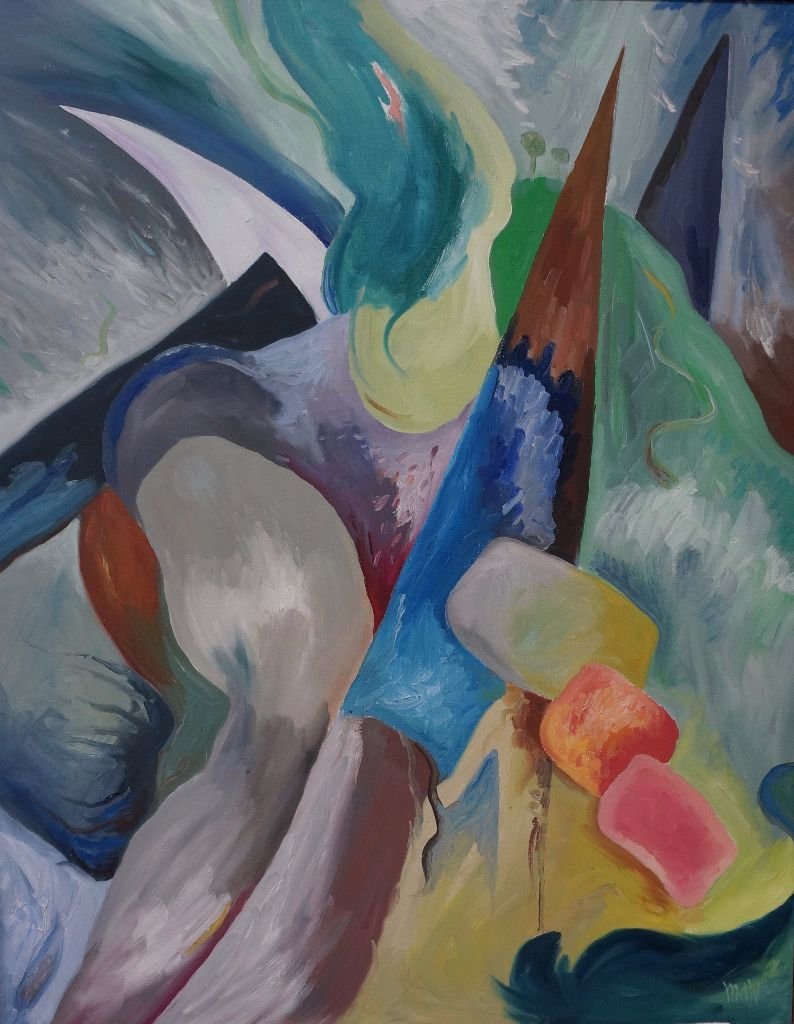
It is interesting for me to study paintings by the masters to see how they employ negative and positive space throughout a painting. By being aware of the two opposing forces a painting can gain in dynamic force. For example when two figures (say by Picasso) are painted, one on the left and one on the right, there is a space between them and this space is considered the negative space. Artists such as Picasso would pay attention to this area and work to have those negative spaces relate or better inter-relate to the positive forms (figures) on either side. There are many intriguing subtleties to paying attention to this area of painting – how negative space affects and enhances the positive forms. Sometimes negative space is interpreted as background but it is much more than that. It literally should define the positive forms. In good painting it serves exactly in that capacity. The negative space is not mere background but should be handled carefully to enhance and give vitality to the prominent positive forms of the painting. This is as true in Abstract Art as it is in more classical styles of art.
One Remarkable Passage
It is my experience that a new painting will often contain at least ‘one remarkable passage’, an area that is exceptional. It often represents an area where you as the artist was particularly focused and that one spot-it just seems to pop. I often call them passages because paintings often are created in stages or passages, certain clusters and then by degrees, all of these various ‘passages’ are brought together and merged. This is certainly true of abstract paintings.
Often towards the end of a painting I will study a work and make decisions how to enliven or enhance an area and this kind of study later on in the painting can result in that ‘one remarkable passage’. We need this kind of advancement to encourage us. We step slightly beyond our abilities and grow just a little and do something that surprises us. These are valuable to us as painters. We should strive for this. I like the story (supposedly true) of an apprentice to Singer Sargeant who observed his process. She said that in the end he would carefully study a painting and then come up to the ‘completed’ painting and then swiftly add just one or two highlights – sometimes a mere dash. It seemed to her that all of a sudden the painting just jumped out just by those one, two or three well-placed accents. It is this kind of attention that makes all the difference.
We are not at his level but we can endeavor to look for, identify and augment that one area that seems to anchor the entire painting, that gives it life and energy. Almost every painting has a particularly strong area. Sometimes it is just a well-placed stroke of color of the right hue or a line that seems perfectly made that unites sections of the painting. Look for that one special area and let it be an encouragement towards your next painting.
Understand the ‘Umbers’
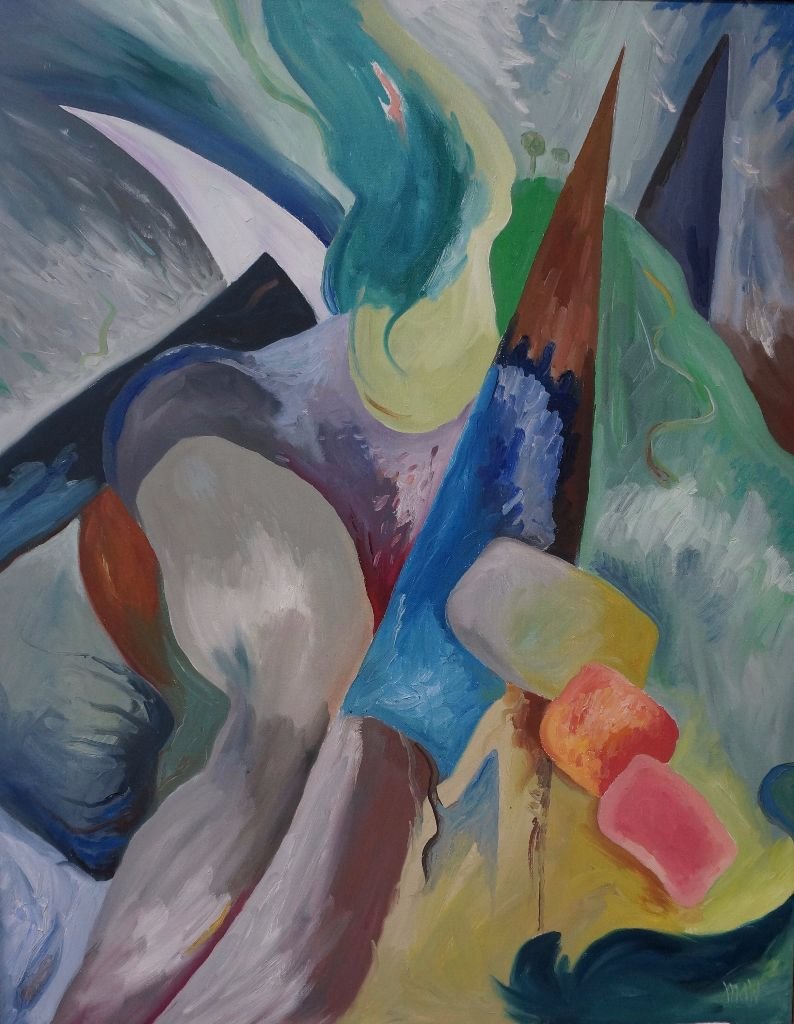
Are you confused about the oil paint tubes marked ‘umber’ this and ‘umber that. Here is a brief description on the several umbers used by artists. It will help you understand the umbers.
The simple answer is that some umbers tend to green and some tend to the red tones. It will be easier for you to understand the umbers by keeping that in mind.
The most common umber is of course Raw Umber. It has a green cast and a very dark tone which is excellent to replace black. I rarely use pure black, preferring to use Raw Umber. The umbers by the way were originally mined from Umbria, Italy and that is how they got their name. The inherent minerals are predominantly iron oxide and manganese oxide. Manganese oxide is a very dark, almost black mineral that leans to the green hue. When umber is calcinated or heated at a very high temperature it is called burnt umber and takes on a more reddish cast. Burnt umber is a beautiful color for deep shadows and for the shaded side of tree bark in a forest painting. The bark of the remarkable mesquite tree requires both raw umber and burnt umber when being painted accurately.
Caravaggio and later Rembrandt used the umbers extensively when their paintings went from light to dark and then to very deep darks of backgrounds. The siennas are also important for your pallette. There is a raw sienna and a burnt sienna. As you can imagine the raw sienna is a yellow cast and the burnt sienna has a distinctive reddish cast. It is interesting by the way to do some comparison between the raw sienna and yellow ochre. I tend to use yellow ochre more myself.
The best way is to experiment but if you want a very dark shadow with almost no reflectivity use the raw umber. If you want a shadow with a little more life to it use the burnt umber. Also, when you tint these with white some very beautiful shades can be created. For many years house painters would use the umbers to tint white and create lovely shades for home interior walls. if you can understand the umbers this will give you an excellent foundation for your pallette and color mixing. For example if you are after a warm grey you will always start with raw umber first and then carefully tint with white, then cobalt blue and a touch of black. I will often add just a touch of cadmium red to warm up the grey further.
The Image as the Thing

A work of two dimensional art typically represents one of two fields of art psychology. The first is the more typical painting which essentially gives us a window into another world, the world the artist has discovered and now wants to represent. It is a slice of time. We are drawn into it in the same way we are drawn to look out a window. The window frames the world outside – a home or building across the street, a wide field, a backyard, a lake. The second field is really a shift in our psychological view. IT is where the ‘The Image as the Thing’ becomes the image itself and it does not point to another world…we do not look to another slice of time because the painting itself is the message. The Image as the Thing, has the inherent intent of being the construction itself. It does not point to another. It creates its own identity rather than attempting to duplicate another.
I call it two fields of psychology because there is a distinct and conscious effort that describes the second effort and this is quite different from the first. THis requires some adjustment for the viewer who is used to seeing that window into another world, something we might call the standard view. The artist however who seeks to paint ‘The Image as the Thing’ is after an effect quite different. The painting becomes the object and we no longer look to see beyond it. Our focus is only on the painting as object. When we look at a typical landscape or portrait or still life we see the objects that are painted. This becomes our focus. When an artist chooses to abandon those objects to create a painting that is itself the object, then we have something that is quite different. Assuming each become framed, the first provides us a framed image that points to a particular scene. In the second the frame encompasses the object itself. This may sound like I am splitting hairs but the intent and the resultant effect are actually quite distinct. It is important that we understand the differentiation especially if you are an artist wanting to understand just where your personal style is going – what are you trying to do?
To give you some example of what I am talking about here – the distinction of these two very different ways of painting, let me point you to the works of Klee, Rothko, Jackson Pollack and of course Kandinsky. Those artists chose an entirely different psychology, a different point of reference that abandoned any particular point in time, any geographical location. In many cases the application of the paint itself became the focus or the characteristic design, or more often, the effect created by both. The idea was to have The Image As the Thing. Those artists I have mentioned and there are many more, didn’t want you to focus on any particular bucolic scene but wants the viewer to fully experience the painting itself. The painting no longer looks to an image beyond but is itself the image…immediately reflecting the viewer’s response. This is certainly one of the main reasons Abstract Painting intentionally lacks depth and perspective.
These artists changed the way we view art. Perhaps what they were after was a more honest psychology, not an idealic setting but a candid view of our own diverse and often opposing reflections of the world we experience. Those artists were perhaps wanting to honestly express personal and inner impressions. The various methods of Abstract painting made this easier. Stripped of the need to represent natural scenes which even Van Gogh was bound to, contemporary abstract artists were able to express themselves more intuitively and more spontaneously. Though Picasso was curiously bound to the female image right to the very end of his career, he nevertheless was probably the first to point in this direction. He did this by abstracting form. The form however remained but he pointed towards the need for a new method of interpretation – Braque and then Kandinsky and the others picked up where he was, shall we say, wanting to go. They abandoned the natural form.
Defining realism

Defining realism is about as difficult as putting a cat in a sack, or neatly categorizing jazz. There are however several helpful key parameters. These are helpful if you are wanting to stay a realist or wanting to move over in to expressionism. One of the defining parameters of realism is that you as the artist must commit to being consistent in the message. If you paint a tree very realistically and then paint a barn in an expressionist style the viewer becomes confused. The painting lacks cohesiveness. Several years ago I painted three large water towers when I wasn’t real sure of my style. Water towers typically have a wide band at the top and one at the bottom. I painted the bands not truly on contour with the cylindrical towers. This would seem a subtle enough mistake but it rendered the painting as being inaccurate because the bands in a realistic painting would of course follow the contour of the water tower, circular, as seen by the eye. At the time I was trying to move away from strict realism and towards expressionism. I had one foot in realism and one in expressionism and the overall effect was watered down.
Realism then must not try to fool the eye. It must attempt to represent nature and that effort must be considered a key parameter. Winslow Homer developed a style that rendered natural scenes in an expressionistic manner. Critics had a difficult time categorizing his work. It looked fresh and spontaneous but it was a formula which took him years to develop and refine. He was successful because he painted the entire painting in the same manner. There were no conflicts of impression to the natural eye.
Expressionism takes liberty with sunlight and perspective. Realism must consistently render sunlight from the same angle and perspective must be believable. This is not to say that realism cannot be very dramatic – captured correctly nature can be wonderfully dramatic. Expressionism is when the artist attempts to stylize the natural impression through his or her own personality. Realism tends toward universalism or the relative negation of personal interpretation.
Being consistent with Style
Being consistent with style is something we hear a lot about, especially when we start taking college credits. Personally that intention for me seemed doomed from the beginning. I quickly determined that any goal that would restrict an authentic impression was not something I seriously wished to pursue. It just wasn’t in my genes. When so many things that we do are determined, fixed and according to a fixed pattern it seems that in art, especially in art we should explore the essential nature of responding honestly. This infers no restriction on style in my view. Being bound to one particular style seemed an incredibly restrictive parameter- that paint could only be applied in one particular fashion, one style.
We naturally think of Van Gogh, of Michelangelo, of Rodin, of Renoir and we admire them because for one thing, they are so recognizable (astonishingly so) and we admire of course their brilliance of vision. These are representatives of our great masters, our genius artists and the style they implied represented them uniquely. That is undeniable. Those of us mere mortals who are trying to hammer out our own vision, cannot afford the restriction of a defining style. It goes against every pure, creative urge. If a style comes of its own after years and years of painting…well, that is a different matter. We are talking now about a natural progression which is far different than beginning a painting where the constructive form, pattern and method of painting follows some pre-conceived fashion. Being consistent with style was never important to me. I thought about it of course but it was never seriously considered as an option. We can think of a whole host of masters who wandered about with regard to style and successfully so. They were on the path of discovery. We can easily point to Gerhardt Ricther, to Kandinsky and to Duchamp. Personally I think Duchamp opted out after his breakthrough painting, THe Nude Descending the Staircase. He could have branched out to another method, another style but instead chose to abandon art entirely. I think he was too absorbed in his credentials, his legacy. He wanted to be remembered for only that one breakthrough style which at the time, put the art world on its ear.
The vast range of human emotion is far me, much too varied and complex not to handled creatively without limits of a fixed format or style. It would be like forcing every experience through this particular sieve or strainer. It tends to deaden our sensitivity to true art and true expression. In today’s world, in this art market we are looking at it may give someone a leg up, a means of being noticed but in the end and eventually the art as an authentic expression will become dry as bones.
The Method of Drag Painting
The method of drag painting goes much further than merely describing the physical process of constructing the frames and manipulating the paint on the hard, panel surface. If it was just a mechanical method, just another device then this would not, of course, be worth pursuing. It is true that what I was after were the accidents, in the beginning. We might call them ‘planned accidents’ of pigment. It turned out to be a unique means to create a sense of accident, where not every nuance was defined and specified. Within certain bounds, anything might happen. Yes, I placed the pigment, I chose the colors, I elected where they might be positioned as so forth…but it can never be known just how all of that becomes manifested once the pressure of the squeeze is applied. Something is created. A brilliant new effect is now brought to life. There is a kind of radiance to the whole process and that is one reason I repeatedly am drawn back to it.
Beyond all of that physicality, all of those creative dynamics came a new dimension – at least for me. It was a dimension that would typically lay hidden in the original drag background (see the recent video by Charles). The psychology unfolded for me very slowly. I hardly recognized it, maybe I didn’t realize it enough to call it anything…to define the disclosure. It did seem to me a type of disclosure and as far as I was concerned it was a calculated one that was lying there waiting to be discovered. I don’t know how else to describe it but call it a psychological phenomena. In garden work, we plant one thing and something very predictable comes out of the earth as a plant from that seed. In the kind of abstract, non- relational drag -painting I am here discussing, highly dependent on the ‘planned accident’, something entirely new is discovered and we could just as easily say manifested because they occur at exactly the same moment. 
The physcology then has to do with the process the artist goes through when he has set the background up on the easel. It is dry now and often has a sheen due to the enamels often used for large panels. The entire thing had been dragged. I had pressed very hard on the surface in different, odd directions. I had applied some overlays randomly but thoughtfully. This then represented the background. In study however certain elements became noticeable. There were hints, traces and suggestions of certain elements. They might be a certain mood, a certain reflection, a type of landscape or even a type of thought pattern. They were recognizable. To bring them out and make them more apparent I now take a brush and paint and with careful attention to the correct hue (one that corresponds to the background painting) paint various enhancements. Those so-called suggestions that I see become little by little more developed. This is the other, vital element to the ‘Method of Drag Painting’.
THe need for great care here is evident. The second over-lay painting must in all cases correspond and relate and balance with the background – one must enhance and enliven the other. There are two paintings entertwined. They become one immutable whole. The means to this is making all those visual discoveries and patterns. Often it is just patterns and sometimes those patterns are only in one small area of the painting. So we work on that and then move to the other area – what is happening there, what needs to be drawn out and enhanced? This is the great vitality that lies under and is a base for this kind of abstract, non-realistic, illusory method of painting. We can easily say that it is the combination of both the un-conscious and the conscious – that kind of metering, that relationship that creates the necessary balance so that we see the painting ultimately as a whole. Even if fragments are clearly evident, they relate to each other by hue, contrast and the blending of the second painting to the semi-accidents of the background painting.
Your First Oil Painting
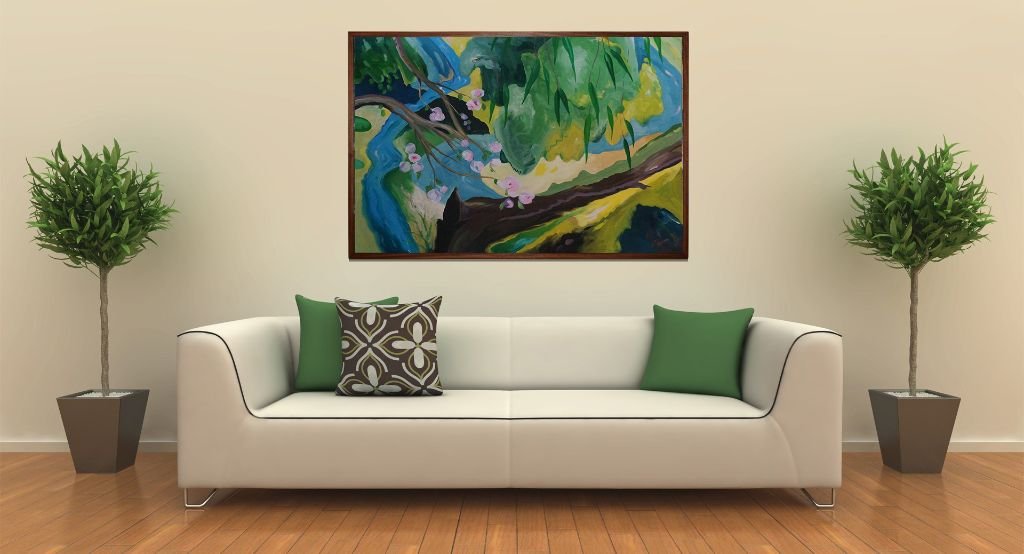
Here is a quick lesson on your first oil painting. You don’t even need to take a class. Let’s get started and I assume you have the basic tools such as stretched canvas, oil paints, some brushes, a rag or two, paint thinnner.
My suggestion would be a still life. Arrange a simple still life of a vase and fruit and insure you have at least three forms. Now try to approximate the colors of each form. You do not need to be accurate, just get close. Draw with graphite on the canvas the shapes as you see them and make the forms as large as possible. Fill the canvas. Now mix the colors on your palette with your brush and paint the forms. IT is not necessary to be accurate in the painting. THis is what I call a two stage painting.
Paint one form and then another and then another until all forms are painted. It is not even necessary to paint within your drawing. The idea is to establish areas of color. At this first stage try to brush out the forms so the paint is fairly flat without ridges…smoother the better for this kind of two stage painting.
Do you have all the forms roughly painted out – each a distinct color? It is perfectly fine if they overlap, if they are not within your drawing and even if the applied colors are correct. Let this dry. After one or two days put it out in the sun to more thoroughly dry. Let it dry for at least a week.
Bring it back in and now we begin with the second part. Take some 100 grit sandpaper and sand the whole painting lightly. Knock down any rough ridges caused by the paint. Dust it off. Now you are looking at blocks and areas of color. Start with one form and see if you can get the color more accurate to the still life that is set up. See if you can paint the shape more carefully. Pay attention now to where the light is hitting the form. Paint this one side lighter and the side away from the light source, darker. Do this with every form. Take your time. The beauty of still life is that it does not move so work more carefully with the second phase. Paint every form complete to the best of your ability.
Now paint the background. Paint what the still life is sitting on. Have fun. The colors or shapes do not need to be accurate. Paint what you see. This is a wonderful way to paint your first oil painting. Painting in two stages like this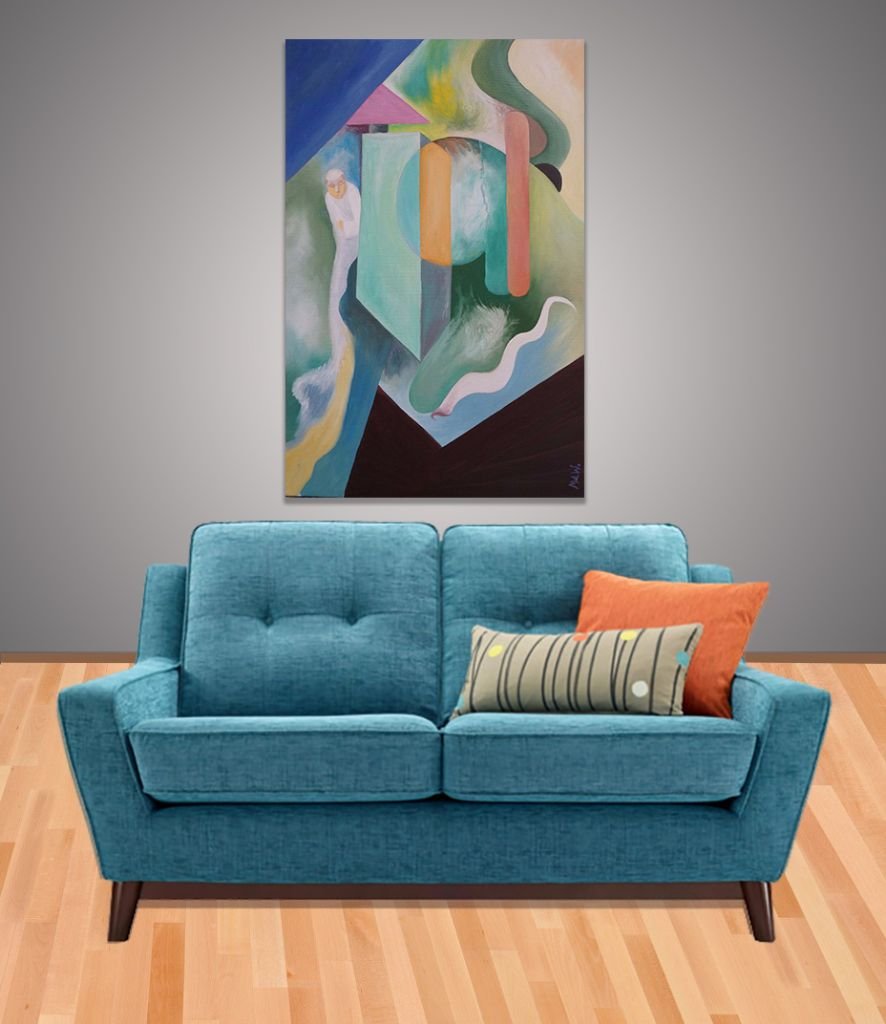 is a good way to begin.
How to look at Abstract Art
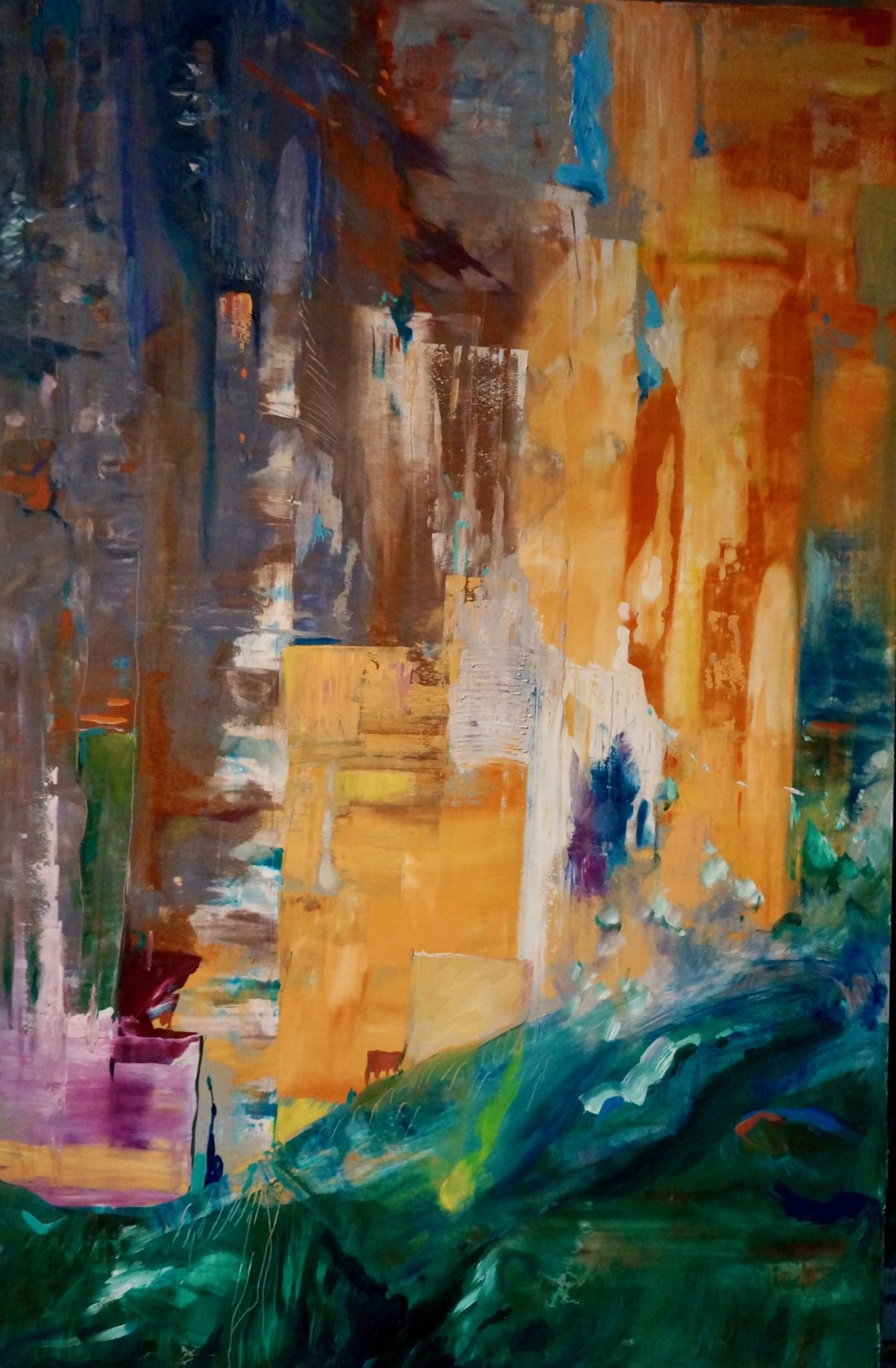
How to look a abstract is like explaining to someone how to listen to jazz, or what to appreciate in modern dance. Sometimes I am asked to explain a painting. The intent here is understandable, assuming that something can be better or more fully appreciated with some background information. Some abstract paintings will have subjects or forms that are vaguely representative – objects can be identified. This is satisfying to the brain, to our emotions. Just prior to the advent of abstract painting, the impressionists informed the public that the forms they were used to seeing were actually made up of fragments, particles of light, a myriad of reflections. It took awhile for the public to respond to this new way of seeing nature, of viewing form.
When there are no references – when nothing is recognizable we are mentally and emotionally placed in a very different orientation. How to look at an abstract painting has very much to do with releasing of preconceptions. By accepting the images as they are, without judgement allows the viewer to comprehend the message of the painting. An abstract painting is rarely intended to impart some sense of profoundness. A relaxed and receptive viewer however may discover the ‘message’ the artist was attempting to manifest. More often the viewer discovers something that resonates for them alone. Each viewer may see something entirely different and even different from what the artist had intended to convey. This is the ultimate benefit to abstract and especially non-objective painting.
As a rule non-objective painting especially is rarely planned out completely. There may be sketches, there may be patterns that have been worked out and sometimes there is a distinct feeling an artist is hoping to convey. Once the painting begins other forces come to play. These forces operate beyond any original conceptions or design. One of the purposes of abstract painting is to allow these inherent and internal forces to be seen. One element that is put down and painted tends to demand a sympathetic painterly response. This goes on and on as the painting is developed. When a viewer can detect these relationships and even to imagine how the painting developed is what makes viewing abstract art so exciting. It goes beyond or under reality. We like to say it comes from the sub-conscious, at least there is a synergy between the conscious original idea and the sub-conscious that is brought forward. The artist allows the two elements to work together. Next time you look at an abstract or non-objective painting, ask yourself how you feel about the painting. How does the painting make you feel? What passages in the painting appeal to you ? Internally do you feel a connection to the piece? The effort to make sense of this type of painting is a waste of effort, any more than trying to make sense of good jazz. Just enjoy the piece as it is. Let it speak to you on its own terms.